
1. 1945: Silence in the City of Sound
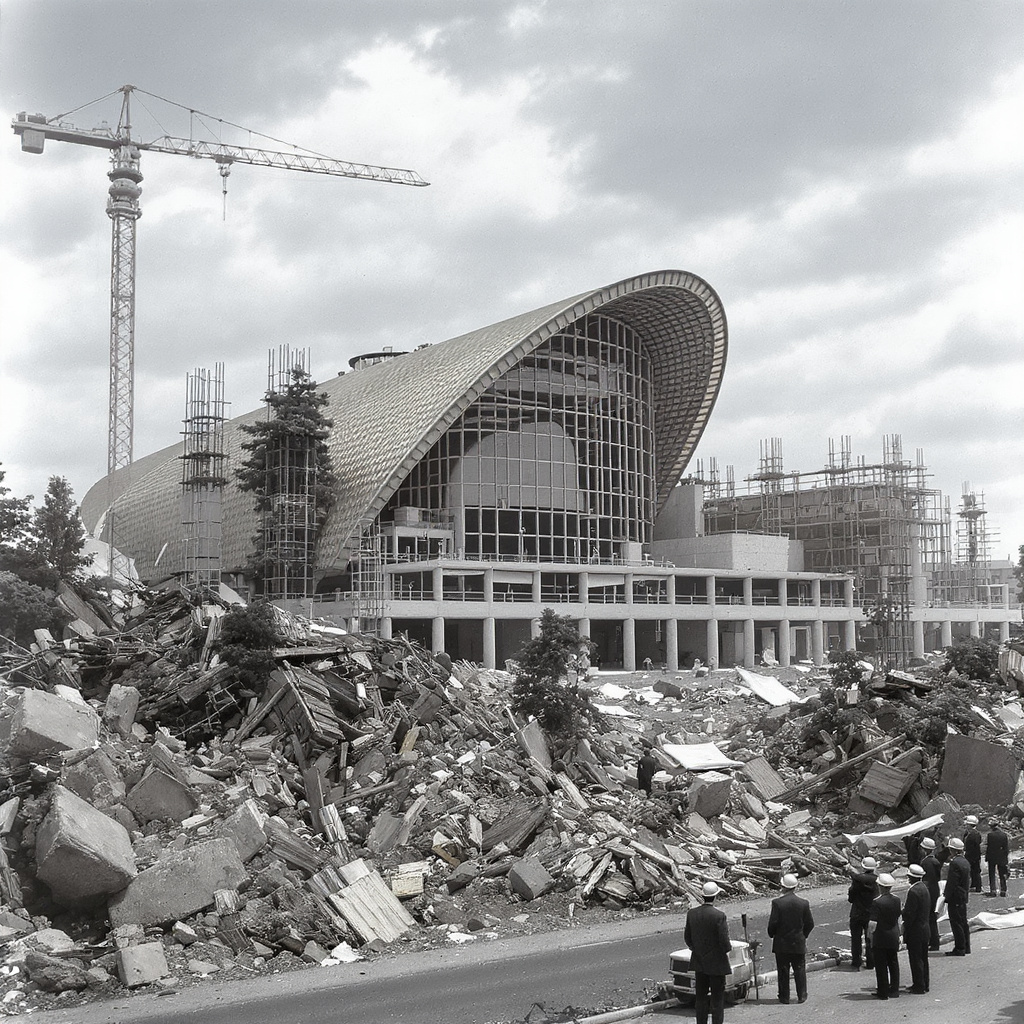
Berlin’s post-war skyline was a ghost of its past. Bombed theaters, crumbled churches, destroyed concert halls — the city had lost not just its buildings, but its music.
Among the ruins stood a longing — the need to reclaim identity through art.
And that longing became a project: the reconstruction of the Berlin Philharmonic.
But this wasn’t a typical procurement effort.
There were no global bids, no structured RFP systems, no ERP dashboards. What existed was something deeper — collective intent.
When a city decides to rebuild its soul, the way it spends money becomes an act of philosophy.
2. Procurement as Healing: Buying More Than Materials
Traditional procurement asks, “What can we afford?”
Berlin asked, “What can restore us?”
The Philharmonic project began in 1956 under limited funds. Yet, the approach was revolutionary — the committee refused to focus on cost-cutting and instead prioritized meaningful value.
They invited architects whose philosophies resonated with the nation’s new democratic and humanist ideals. Out of hundreds of submissions, Hans Scharoun was selected — not because his proposal was financially optimal, but because it felt emotionally authentic.
That single choice reframed procurement as an act of cultural alignment.
3. The Procurement Philosophy: Vision Before Vendor
Hans Scharoun’s vision was radical — he believed the audience should surround the orchestra, not sit in front of it. Music, he said, should “flow through space like light.”
Convincing the committee to fund this unconventional structure was difficult. But Scharoun had one thing on his side — a procurement system that valued trust over control.
Instead of rigid specifications, the project’s contracts used guiding principles:
- “Form must follow sound.”
- “Materials should reflect resonance, not opulence.”
- “The building must serve both performer and listener equally.”
These weren’t line items. They were philosophical specifications.
Modern PMs can take a cue here — sometimes, the right procurement framework is not about dictating deliverables but defining the essence of value.
4. The Partnership Model: Vendors as Co-Creators
Under Scharoun’s leadership, procurement wasn’t linear. It was symphonic.
Each supplier — from carpenters to acousticians — contributed creative input.
- The wood supplier helped shape sound panels for warmth.
- The steel fabricator suggested structural changes for resonance.
- The interior designer influenced how light complemented tone.
There was no “prime contractor” model. Instead, a co-creative procurement framework where responsibility and ownership were shared.
Integration was achieved through conversation, not control.
5. Managing Costs Without Killing Creativity
Post-war Germany was under strict reconstruction budgets. The project couldn’t afford extravagance. Yet, every design element felt luxurious — not because of cost, but because of care.
Scharoun and his procurement team mastered value engineering with empathy:
- Substituted imported marble with locally sourced pine that enhanced sound.
- Used modular structures to reduce waste.
- Collaborated directly with artisans to cut intermediaries.
They didn’t minimize cost — they maximized meaning per mark spent.
6. The Legacy: Procurement as a Cultural Act
When the Berlin Philharmonie opened in 1963, it wasn’t just a building. It was a resurrection.
It told the world that procurement, when guided by purpose, can rebuild not only structures but spirits.
The concert hall became an international benchmark for acoustic excellence and human-centered design.
For Project Managers, it remains a masterclass in strategic procurement thinking — proving that when you choose suppliers aligned with vision, you get products that transcend purchase orders.
7. Lessons for Modern Project Managers
- Procurement Is a Mirror of Values.
The vendors you choose reflect the principles you uphold. - Trust Is the Strongest Contract.
Agreements anchored in mutual respect outperform any clause. - Creativity Needs Constraints.
A well-framed budget encourages innovation, not limitation. - Value Is Emotional, Not Just Financial.
The Berlin Philharmonie wasn’t the cheapest project — it was the right one. - Procurement Can Heal.
Every spending decision can either sustain systems or uplift societies. Choose the latter.
8. The Final Note: Harmony Beyond Commerce
More than six decades later, the golden glow of the Philharmonie stands not as a monument of luxury, but as proof that disciplined procurement can serve a nation’s heart.
Project Procurement Management, when done right, isn’t just about who supplies what — it’s about who believes with you.
That’s how Berlin bought back its harmony — not from a vendor, but from a vision.
Leave a Reply
You must be logged in to post a comment.