
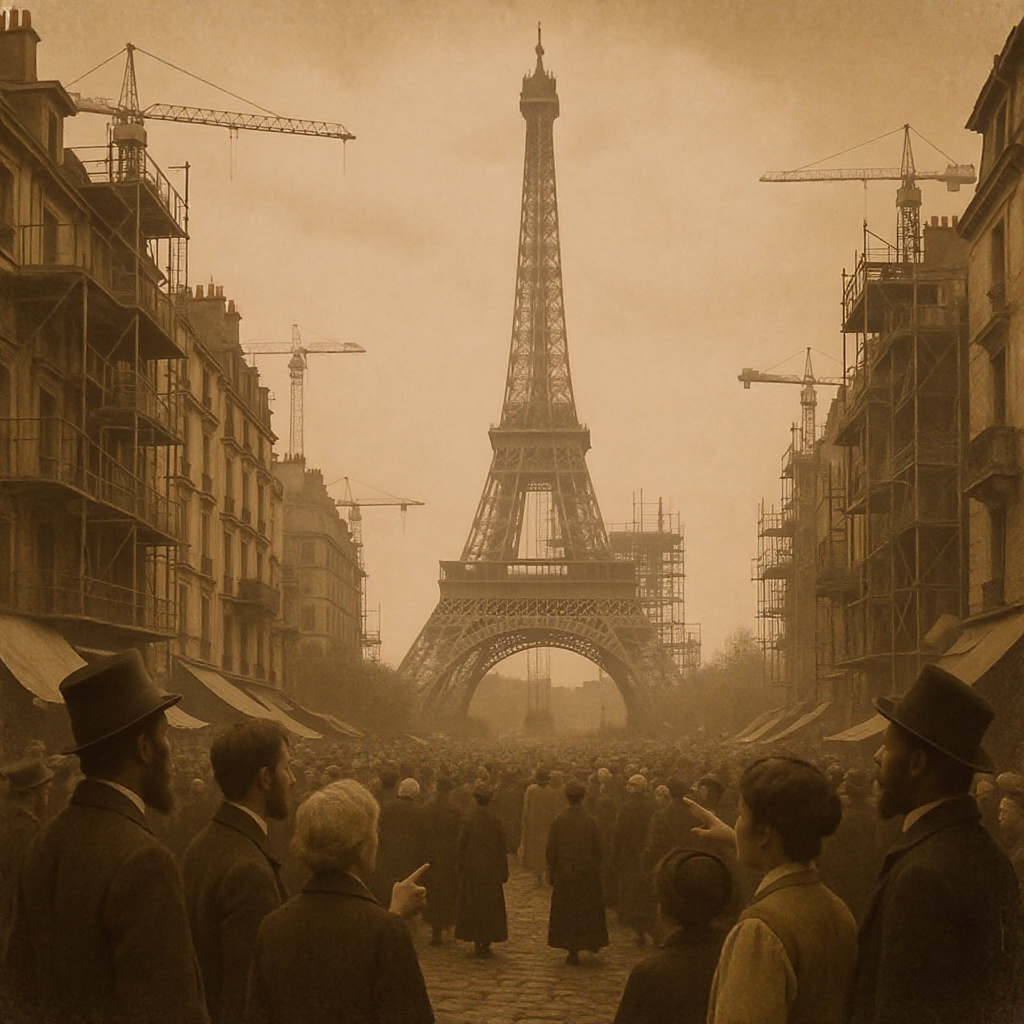
1. Paris, 1887 — A City Divided by Iron and Ego
When Gustave Eiffel proposed building a 300-meter iron tower for the 1889 World’s Fair, Paris was the cultural capital of the world — elegant, artistic, and proud of its stone monuments. The idea of a steel skeleton rising above the skyline horrified the elite.
More than 300 prominent citizens — including writers like Maupassant and Dumas — signed a letter calling it “a monstrous eyesore.” Newspapers mocked Eiffel as delusional. Even politicians who funded the exposition feared public backlash.
Yet Eiffel remained calm. He knew this wasn’t just a technical project; it was a battle of perception.
2. The Art of Stakeholder Segmentation (Before Power-Interest Grids Existed)
Eiffel intuitively grasped what we today call stakeholder mapping.
He broke his audience into four groups:
- Decision-makers (the government and exposition committee) — needed progress updates, not persuasion.
- Cultural elites — needed reassurance that art and engineering could coexist.
- Investors — needed confidence in financial and technical feasibility.
- The public — needed wonder and transparency.
For each group, Eiffel crafted a different narrative. He didn’t speak engineering jargon to poets, nor artistic metaphors to financiers.
3. Communication as Strategy, Not Tactic
Eiffel turned communication into a leadership tool. Instead of defensive press releases, he used visibility as persuasion.
He built viewing platforms at the site, invited the press to witness milestones, and regularly published detailed progress reports.
Critics began to realize the precision behind the madness. Slowly, curiosity replaced contempt.
Modern project managers can learn from this — stakeholder communication is not about frequency; it’s about empathy. The message must meet people where they stand.
4. Conflict as a Catalyst for Innovation
Eiffel used opposition as fuel. When artists claimed iron lacked beauty, he redesigned elements of the structure to show aesthetic symmetry.
He didn’t eliminate their critique — he integrated it into the design.
That’s stakeholder management at its finest: transforming tension into transformation.
Today, when teams resist change, a similar principle applies — resistance often reveals blind spots we’d otherwise ignore.
5. Public Engagement: The First “Open Demo” in History
By 1888, thousands visited the construction site. Eiffel’s decision to open the process — to let people see, touch, and question — built trust.
This is equivalent to Agile demos today, where transparency builds confidence.
The public saw steel beams rising skyward with mathematical precision. Critics saw it too — and their tone softened.
6. The Ultimate Stakeholder Move: Purpose Alignment
Even after the tower opened, stakeholders questioned its relevance post-exposition. Eiffel cleverly reframed its purpose — turning it into a scientific observatory and wireless telegraph hub.
By integrating new value into the project’s life cycle, he extended its relevance far beyond its original scope.
That’s what true stakeholder mastery looks like — finding long-term alignment between project value and evolving needs.
7. Lessons for Today’s Project Managers
- 1️⃣ Win trust through visibility, not persuasion. Let progress speak louder than presentations.
- 2️⃣ Tailor communication to influence, not hierarchy. Not all stakeholders are equal — but all are important.
- 3️⃣ Reframe resistance as contribution. Every critic hides a potential improvement.
- 4️⃣ Extend your project’s story beyond delivery. Great projects integrate with the future.
- 5️⃣ Anchor your leadership in purpose, not popularity. The Eiffel Tower still stands tall because it represented belief in innovation, not consensus.
8. The Legacy of Integration Through Stakeholders
By the time the 1889 World’s Fair opened, the Eiffel Tower was the tallest structure in the world — and one of the most beloved.
The same citizens who once mocked it now embraced it as Paris’s identity. What changed wasn’t the tower — it was the narrative.
Eiffel proved that great projects aren’t just engineered — they’re championed. Stakeholder management, at its core, is the art of emotional architecture.
Leave a Reply
You must be logged in to post a comment.