Category: 2025

Debunking the Myth: Project Communications Management Is Just Sending Emails
The Silent Project Killer Raise your hand if you’ve ever thought, “As long as I send the update, I’ve communicated.” We’ve all been there. It’s the oldest myth in project management: communications management is just about sending emails or slapping together a status report. Spoiler alert—it’s not. As someone who’s steered projects from chaos to…
Debunking the Myth: Project Stakeholder Management Is Just Keeping the Boss Happy
The VIP Trap Ever heard the phrase, “Keep the stakeholders happy”? It’s project management gospel, but too often, it gets twisted into “Keep the *boss* happy.” This myth—that stakeholder management is just about pleasing the top dogs—can sink your project faster than a bad scope. As a seasoned PM, I’ve seen the fallout when you…
Debunking the Myth: Agile Means No Planning or Documentation
The Whisper That Won’t QuitYou’ve probably heard it in boardrooms or break rooms: “Agile? Oh, that’s just for teams who hate planning and paperwork.” It’s a myth as old as Agile itself, born from a kernel of truth twisted into a full-blown misconception. Today, we’re tearing it down—piece by piece—because as a project manager who’s…
Scope Overload? Mastering Boundaries to Keep Your Project on Track
Introduction: The Perils of Scope Creep Every project begins with a clear vision and defined boundaries. However, as projects progress, additional features, requirements, and ideas often seep in—leading to scope creep. This uncontrolled expansion can lead to missed deadlines, budget overruns, and compromised quality. Mastering project scope management means setting and maintaining boundaries that protect…

Procurement: The Unsung Hero of Project Success
The Vendor That Almost Sank Us Picture this: a tight deadline, a critical hardware delivery, and a vendor who swore they’d deliver. Two days before go-live, they ghosted us. No parts, no answers—just panic. We scrambled, found a backup supplier, and pulled it off, but the stress shaved years off my life. That day, I…
Mitigating the Unknown – Proactive Risk Management Strategies for Uncertain Times
Introduction: The Imperative of Proactive Risk Management In any project, uncertainty is a given. Risks—ranging from minor hiccups to major disruptions—can arise unexpectedly, potentially jeopardizing timelines, budgets, and quality. The best project managers don’t just react to risks; they anticipate, prepare, and adapt. Proactive risk management is about creating an environment where potential threats are…
The Schedule Squeeze: Navigating Tight Timelines in Modern Projects
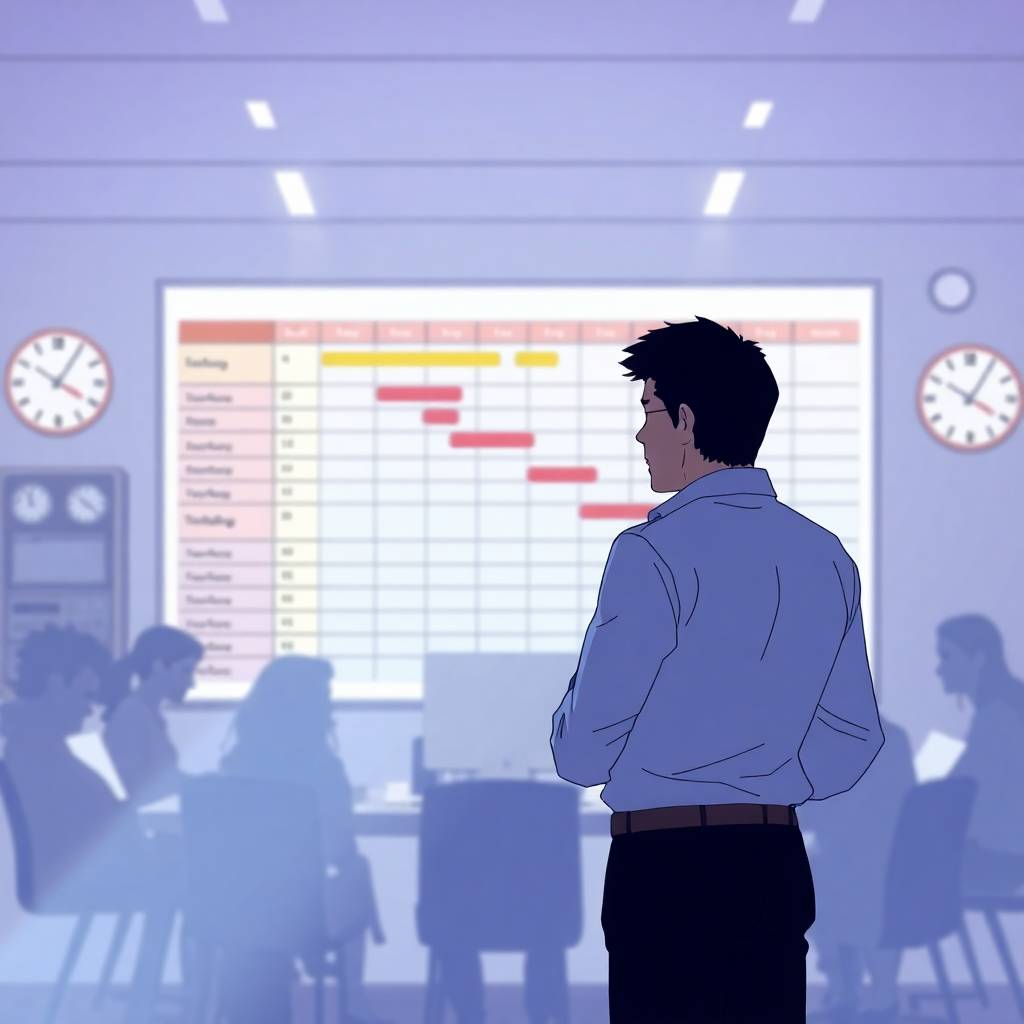
The Day the Clock Almost Won It was week four of a six-week project, and we were behind. A critical task had ballooned, and the client’s deadline loomed large. Panic crept in—but I’d faced this before. We regrouped, zeroed in on the critical path, and made tough calls on what could wait. With daily check-ins…
Procurement Innovation – Transforming Supplier Relationships into Strategic Partnerships
Introduction: Evolving the Procurement Paradigm Procurement has long been seen as a back-office function—focused on negotiating prices and managing orders. Today, however, successful project managers recognize that procurement can be a strategic lever. In an era of rapid technological change and global market fluctuations, innovative procurement transforms supplier interactions from transactional exchanges into dynamic partnerships…
The Schedule Squeeze: Navigating Tight Timelines in Modern Projects
The Day the Clock Almost Won It was week four of a six-week project, and we were behind. A critical task had ballooned, and the client’s deadline loomed large. Panic crept in—but I’d faced this before. We regrouped, zeroed in on the critical path, and made tough calls on what could wait. With daily check-ins…
Project Integration Management – The Symphony of Success: Bringing All Project Pieces Together
Introduction: Setting the Stage for Success Project Integration Management is the art of bringing together all the disparate elements of a project—scope, schedule, cost, quality, resources, and communications—into a cohesive, well-orchestrated whole. Like a conductor guiding an orchestra, a project manager must ensure that each component plays its part at the right time, in harmony…