
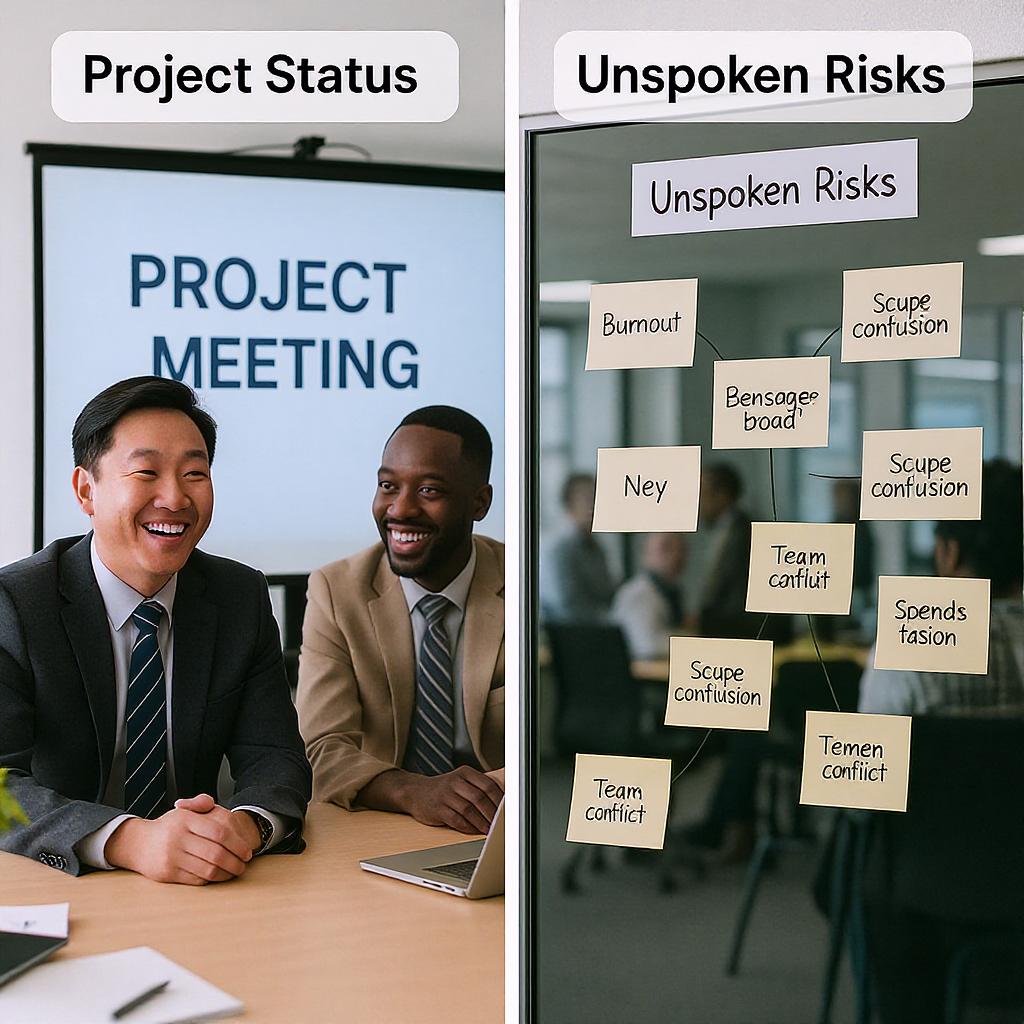
▶️ Introduction – Beyond Gantt Bars: The Human Side of Time
Most schedule guides focus on task sequencing and slack time. They assume time is an objective commodity. Yet in every project, teams live—and die—by how they feel about that time. This article unveils two powerful but under‑leveraged concepts:
- Time Psychology – our mental biases around effort, deadlines, and pacing.
- Trust Velocity – the speed at which team confidence in the schedule rises or falls.
By mastering these, PMs can transform schedules from rigid mandates into living agreements that teams own, believe in, and deliver.
1️⃣ The Bias Trap: Why We Misjudge Time
- Planning Fallacy
- Tendency to underestimate task durations, even when history says otherwise.
- Parkinson’s Law
- Work expands to fill the time allotted—even padding that slows progress.
- Procrastination Spiral
- Far‑off deadlines lower urgency; last‑minute panic reduces quality.
- Overconfidence Effect
- High‑performing teams assume they’ll repeat past heroics—until they can’t.
Insight: Recognizing these biases is step one. You can’t fix what you don’t surface.
2️⃣ Cultivating Realistic Timeframes with Mental Models
- Reference Class Forecasting
- Compare new tasks to past, similar tasks to anchor estimates.
- Premortem Sessions
- Imagine failure scenarios up front to surface hidden time suckers.
- Buffer Distribution
- Instead of uniform padding, place buffers strategically around high‑risk tasks.
- Timeboxing & Thin Slicing
- Break deliverables into very short cycles (1–2 days) to force focus and rapid feedback.
3️⃣ Introducing Trust Velocity
- Definition: Rate of change in collective confidence that the team will meet upcoming milestones.
| Trust Velocity Indicator | What It Reveals |
|---|---|
| Trust Score Polls | Weekly anonymous confidence rating |
| Milestone Debriefs | Post‑milestone narrative + lessons |
| Decision Lag Time | Time between issue raised and decision |
| Rework Frequency | How often tasks bounce back for fixes |
| Commitment Stickiness | % of team who still believes timeline after 2 weeks |
High trust velocity → decisions made within hours, approvals in minutes, fewer status‑quibble meetings.
Low trust velocity → bottlenecks, repeated swims against the current, and schedule erosion.
4️⃣ Building & Measuring Trust Velocity
A. Co‑Creation Rituals
- Sprint Schedule Workshops
- Invite team to critique, adjust, and commit to the upcoming sprint’s timeline.
- “Commitment Contract”
- A lightweight written agreement of key dates, risks, and shared responsibilities.
B. Trust Checkpoints
- Weekly Confidence Poll
- 1–5 scale on “How confident are you the team will hit Milestone X?”
- Red/Yellow/Green Trust Flags
- Visual timeline overlay showing trust levels per phase.
C. Rapid Recovery Tactics
- Micro‑Retros
- 15‑minute stand‑up drill focused solely on schedule trust issues.
- Flash Task Forces
- Small, cross‑functional squads empowered to unblock high‑risk tasks immediately.
5️⃣ Case Study: From Schedule Doubt to Delivery Delight
Project Tempo (2023 – Global App Launch)
- Situation: Initial timelines were missed twice, morale dipped, stakeholders lost faith.
- Intervention:
- Introduced Trust Score polls.
- Buffer reallocation around API integrations.
- Weekly “Trust Sync” meetings separate from daily standups.
- Outcome:
- Trust velocity jumped from -10% to +25% week‑over‑week.
- Final release delivered on the 4th revised baseline—no further slippage.
- Stakeholder NPS rose from 45 to 78.
Key Takeaway: Actively managing how people perceive and believe in the schedule can be as impactful as re‑sequencing tasks.
6️⃣ Overcoming Common Pushbacks
- “We don’t have time for more polls.”
- Polls take 30 seconds, but save hours in alignment meetings.
- “We already estimate with history.”
- Reference class forecasting only works if you use historical data in facilitated workshops.
- “Our stakeholders want fixed dates.”
- A “living timeline” with clear trust metrics builds credibility—and realistic expectations.
- “Buffering feels like wasted time.”
- Strategic buffers reduce crunch‑time fatigue and last‑minute firefighting, freeing up more net productive hours.
7️⃣ Self‑Assessment: Your Schedule’s Time Psychology & Trust Maturity
| Statement | Yes | No |
|---|---|---|
| We use reference class forecasts for key tasks | ☐ | ☐ |
| We regularly poll team confidence in hitting upcoming milestones | ☐ | ☐ |
| Buffers are applied strategically, not uniformly across tasks | ☐ | ☐ |
| We track decision lag times and take action when they exceed thresholds | ☐ | ☐ |
| Trust metrics (Trust Score, Rework Frequency) are displayed alongside schedule progress | ☐ | ☐ |
Fewer than 3 “Yes” answers? Strengthen your time‑psychology and trust‑velocity practices to avoid hidden slippage.
8️⃣ Templates & Tools for Time Psychology & Trust Velocity
- Trust Score Poll Template (Google Forms / MS Forms)
- 3 questions: confidence rating, biggest concern, suggested mitigation.
- Time‑Bias Awareness Canvas
- Visual worksheet for mapping bias risks per major task.
- Trust Velocity Dashboard (Power BI / Tableau)
- Combines timeline, trust score trendline, and decision lag heatmap.
- Quick‑Start “Commitment Contract”
- One‑page agreement with milestone dates, key risks, and “what I need” from each role.
- Micro‑Retrosue Guide
- 15‑minute agenda for schedule trust check‑ins.
➡️ Next Steps: Turning Time into Shared Confidence
- Run a Time‑Bias Workshop – Surface your team’s hidden estimation traps.
- Kick Off Trust Polls – Start with one milestone and collect your first Trust Scores.
- Reallocate Buffers – Shift padding to high‑uncertainty tasks, not blanket across the plan.
- Visualize Trust & Time – Put trust metrics next to Gantt bars on your dashboard.
- Embed Rapid Recovery – Define “flash squads” empowered to act on low‑trust alerts.
🔚 Conclusion – Schedules Succeed When People Believe in Them
Project schedules are more than sequences of tasks—they’re shared commitments.
When teams trust the plan, they move decisively.
When trust wavers, even the most sophisticated tool can’t prevent slippage.
By attending to time psychology and trust velocity, you transform your schedule from a static map into a dynamic pact—one that guides, aligns, and propels your team to on‑time delivery.
Leave a Reply
You must be logged in to post a comment.