
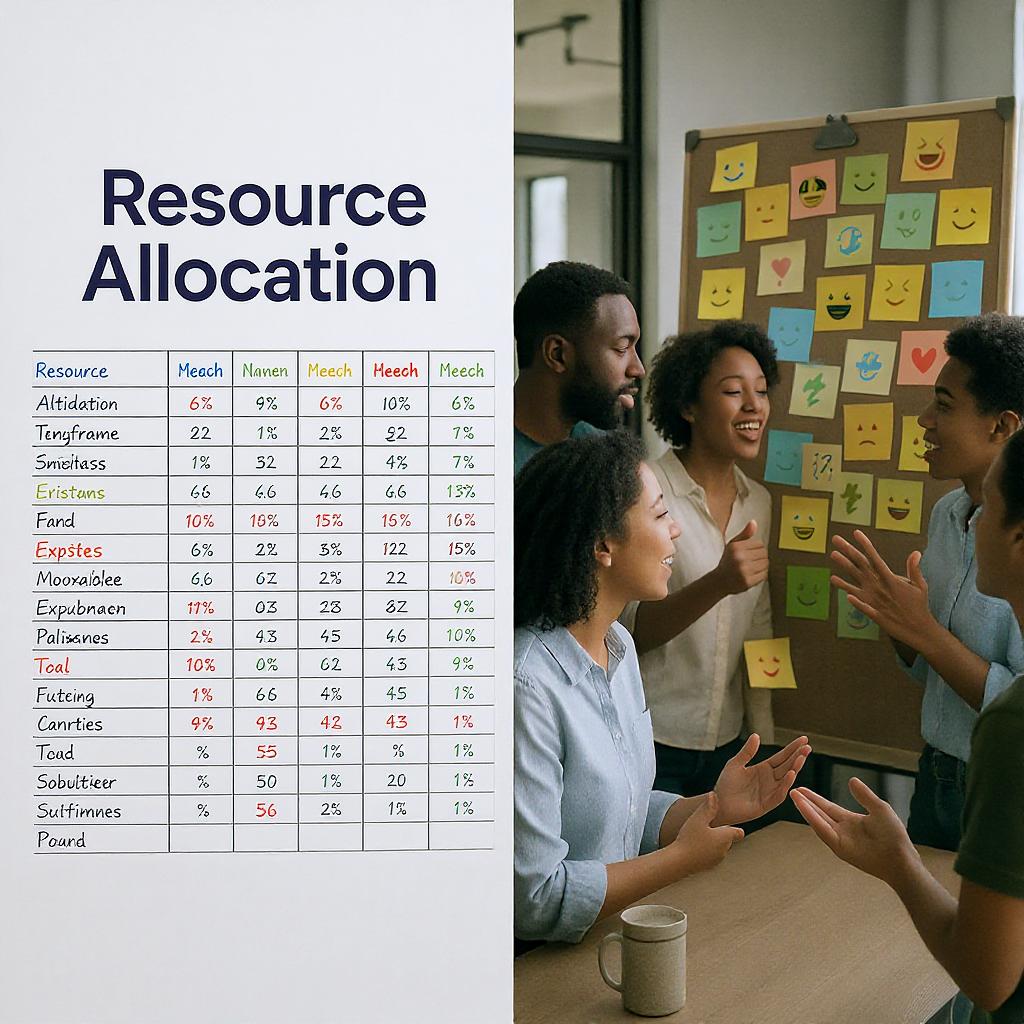
▶️ Introduction – Your Spreadsheet Can’t Feel Fatigue
You can plan perfect sprints on paper.
But if your team’s mentally exhausted or emotionally checked out, the project stalls—quietly and painfully.
Welcome to the invisible side of resource management.
For decades, we’ve over-indexed on availability, skills, and utilization.
We forgot to manage attention, fatigue, relationships, and morale.
This article explores how modern PMs create teams that thrive—not just survive.
1️⃣ The Fallacy of “Full Utilization” in Classic Resource Management
- 100% Booked ≠ 100% Effective
- Over-allocated teams suffer quality drops, not efficiency gains.
- No Space to Think or Reflect
- Projects leave no room for curiosity, retrospection, or iteration.
- Task Switching Kills Focus
- Jumping between Jira, email, meetings, and execution ruins flow.
- Excel-Based Planning Doesn’t Know People
- Spreadsheets don’t capture mental load, trust gaps, or hidden blockers.
2️⃣ Modern Resource Management = Human Rhythm Design
- Energy Mapping, Not Just Hours
- Identify when people are most productive (mornings, post-lunch, deep work windows).
- Focus Overload Limits
- Cap concurrent initiatives per person. Prioritize attention, not just availability.
- Role Rotation with Intent
- Let devs play QA roles sometimes, or BAs shadow users. Cross-pollinate learning.
- Buffer Time Between Critical Phases
- Avoid “handover fatigue” by placing decompression days before major transitions.
- Capability + Motivation Alignment
- Match not just skills, but personal enthusiasm for the task.
3️⃣ Real-Life Stories of Resource Mismanagement (and Rescue)
⚠️ Project ClockOut (2019 – HRMS Platform Overhaul)
- Resources overbooked across two projects.
- Rework caused sprint rollover for 5 weeks straight.
- Three resignations within 2 months.
- Recovery took 6 months post-project.
✅ Project DeepDive (2022 – FinTech Feature Revamp)
- Each sprint started with a “focus + fatigue check-in.”
- Roles reshuffled mid-sprint based on bandwidth.
- 4-day sprints + 1-day innovation buffer used.
- NPS rose by 18%. Zero attrition for 9 months.
🎯 Takeaway: People-first planning is a productivity superpower.
4️⃣ Anti-Burnout Resource Tactics That Work
- Heat Maps of Team Load
- Visualize over-allocation beyond FTE %—look at complexity, not just effort.
- Mood Boards in Retros
- Use emojis or sliders to capture team sentiment per sprint.
- Shadow Sprints
- Plan bandwidth buffers for shadowing or low-stakes learning.
- Rotating Off-Fridays
- One team member per week gets a Friday off—systematic decompression.
- Human Risk Register
- Flag not just technical risks, but emotional and social ones (team conflicts, disengagement, etc.)
5️⃣ Redefining “Resource Planning” Vocabulary
| Traditional Term | Modern Mindset |
|---|---|
| Resource Utilization | Human Energy Mapping |
| Resource Allocation | Purpose & Skill Alignment |
| Resource Bandwidth | Cognitive & Emotional Load |
| Bench Management | Strategic Rest & Learning |
| Resource Conflict | Priority Alignment Conversation |
🧠 The words you use shape how you treat your team.
6️⃣ Audit Your Resource Practices (Honest Version)
| Statement | Yes | No |
|---|---|---|
| We consider context-switching cost when assigning work | ☐ | ☐ |
| Our planning includes mental/creative bandwidth—not just hours | ☐ | ☐ |
| Team members can decline tasks based on cognitive load | ☐ | ☐ |
| We track emotional/relational risk—not just delivery milestones | ☐ | ☐ |
| Buffers are intentionally used for rest, not just delays | ☐ | ☐ |
👉 3+ “No” = You’re likely optimizing spreadsheets, not humans.
7️⃣ Tools & Templates That Center the Human
- Team Health Radar (Jira / Miro)
- Map team’s confidence, stress, and clarity visually.
- Rhythm Calendar
- Weekly map of each person’s peak focus hours, breaks, and commitments.
- Switch-Cost Calculator
- Estimate drop in efficiency from multi-tasking, and plan assignments accordingly.
- Burnout Watch List
- Proactively flag at-risk individuals based on hours, attitude, and sprint feedback.
- People Portfolio Matrix
- Map not just skills, but passions, motivation triggers, and coaching needs.
🔚 Conclusion – You Don’t Manage “Resources.” You Support People.
There’s no substitute for people who feel seen, supported, and safe.
They don’t just show up—they level up.
Great project managers don’t just push deadlines.
They pace the team. Protect focus. Promote well-being.
Because behind every successful project is not a plan.
It’s a group of humans… who didn’t burn out while building.
Leave a Reply
You must be logged in to post a comment.