1. A Dream Too Big to Belong to One Nation
In the late 19th century, connecting the Atlantic and Pacific wasn’t just an engineering dream — it was a geopolitical obsession.
Every great power wanted control of that maritime shortcut.
When the French began the project in 1880, optimism ran high. Ferdinand de Lesseps, the mastermind behind the Suez Canal, was hailed as a visionary. But he failed to grasp that the Panama jungle was not the Egyptian desert.
While Suez had been a battle of sand and logistics, Panama would be a war of disease, rain, and human endurance.
Stakeholders in the French era — financiers, politicians, contractors, and the press — were unified by pride, not by planning.
There were no health strategies, no risk plans, and no stakeholder engagement beyond propaganda.
By 1889, the company collapsed, bankrupt and broken. The dream sank — along with the lives of 20,000 workers.
Lesson: When stakeholder alignment is built on ego, collapse is not a risk — it’s a schedule milestone.
2. The American Takeover – From Failure to Framework
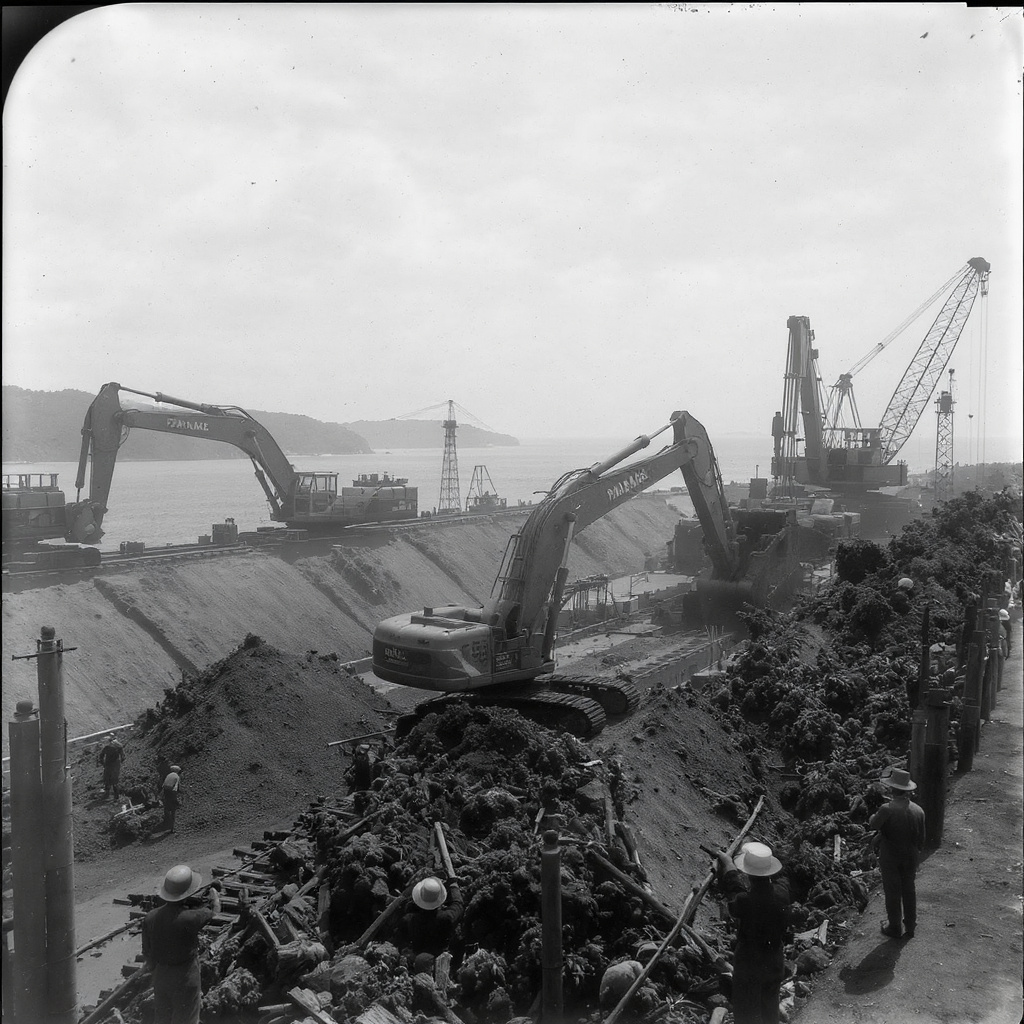
When the United States acquired the canal rights in 1904, they inherited chaos. The terrain was unforgiving, the workforce demoralized, and local trust nonexistent.
But unlike the French, the Americans began not with digging — but with diagnosis.
They knew that without managing the ecosystem of human, political, and environmental forces, the canal would again fail.
Thus began one of the most comprehensive stakeholder engagement strategies in project history.
Key Stakeholders Identified:
- Local Communities: Whose lands, livelihoods, and culture were directly affected.
- Foreign Workers: Thousands from the Caribbean, Asia, and Europe who formed the labor backbone.
- Governments: Panama, Colombia, and the U.S., each with competing interests.
- The Global Trade Network: Waiting for a passage that could redefine logistics.
- The Environment: A silent but powerful stakeholder — tropical storms, diseases, and unpredictable terrain.
Instead of treating them as obstacles, the Americans treated them as partners to be understood.
Lesson: Stakeholder management starts with empathy before engagement.
3. Managing Invisible Stakeholders – Health, Morale, and Fear
One of the project’s most underestimated stakeholders was public health.
Malaria and yellow fever had wiped out the French workforce. To the Americans, these weren’t just diseases — they were project killers.
Enter Dr. William Gorgas, a medical visionary.
His mission: to eliminate the mosquito-borne diseases ravaging the isthmus.
He led what we would today call a non-technical project dependency — an initiative outside the critical path but vital for success.
- He drained swamps.
- Fumigated homes.
- Installed mosquito nets.
- Educated workers about hygiene and safety.
Within two years, malaria deaths dropped by 90%.
By managing health, he managed morale — and by managing morale, he managed productivity.
Lesson: Not every critical stakeholder is human — some are biological, environmental, or systemic.
4. The Politics of Progress – Roosevelt’s Diplomacy as Stakeholder Mastery
President Theodore Roosevelt understood that the canal wasn’t just an engineering project — it was a statement of national identity.
He knew every decision had global scrutiny.
To build trust, he needed to manage both perception and partnership.
He used diplomacy to secure treaties and legitimacy, ensuring Panama’s independence from Colombia in 1903 — a masterclass in political stakeholder management.
He didn’t command; he negotiated.
He didn’t silence critics; he convinced them.
In modern PM terms, Roosevelt ran a multi-level stakeholder alignment plan — combining communication, negotiation, and shared vision-building.
His approach proved that no project succeeds by authority alone — it succeeds by alignment of interests.
5. The Human Core – Goethals, the Engineer Who Led Like a Diplomat
When George Washington Goethals took over as Chief Engineer, he faced an exhausted, diverse workforce — Americans, Panamanians, West Indians, and Europeans — all working under brutal conditions.
He implemented a new governance model:
- Open communication through weekly Q&A sessions with workers.
- Transparent decision-making.
- Accountability through measurable outcomes.
He combined technical competence with emotional intelligence, bridging cultural divides and uniting thousands behind a single goal.
In today’s language, Goethals ran a matrix organization where empowerment replaced enforcement.
Lesson: A project leader who listens once achieves more than one who commands twice.
6. From Chaos to Channel – The Power of Structured Stakeholder Engagement
The Panama Canal was completed in 1914 — but its success wasn’t in the concrete. It was in the relationships that held the effort together.
The U.S. didn’t build faster than the French.
They built smarter, because they managed:
- Information transparency.
- Stakeholder influence mapping.
- Environmental risk alignment.
- Health system dependencies.
- Workforce morale as a measurable deliverable.
Each of these today forms part of PMI’s Stakeholder Management framework:
- Identify stakeholders.
- Analyze their influence and interests.
- Plan engagement strategies.
- Manage and monitor their expectations continuously.
The Americans didn’t have these tools — but they lived them.
Lesson: Modern frameworks are born from historical scars.
7. Modern Lessons for Project Managers
The Panama Canal offers timeless insights:
🔹 Map Stakeholders Beyond Titles:
The loudest voice isn’t always the most influential. Sometimes the “invisible” ones — environment, community, health — decide your fate.
🔹 Treat Health and Safety as Engagement Tools:
Gorgas proved that protecting people builds loyalty stronger than incentives.
🔹 Lead with Transparency:
Goethals showed that open communication neutralizes resistance faster than authority ever can.
🔹 Align Interests, Don’t Suppress Them:
Roosevelt’s diplomacy reminds us that lasting solutions come from convergence, not coercion.
🔹 Respect the Context:
Lesseps failed not because he lacked skill — but because he ignored the unique cultural, environmental, and human context of Panama.
8. Final Reflection – The Canal That Flows Through Time
Today, ships from 160 nations cross the Panama Canal every year. It remains one of humanity’s greatest infrastructure projects — not for its size, but for its stakeholder choreography.
It united oceans, but also ideologies.
It taught us that managing projects is not about pushing timelines — it’s about pulling people toward purpose.
So when you manage your next project — whether it’s a software deployment or a construction megaproject — ask yourself:
Have I managed my canal of stakeholders?
Or am I still trying to dig through rock without understanding who holds the water?
Because in the end,
Every project is a canal — and every stakeholder, a tide that decides whether it flows or fails.
Leave a Reply
You must be logged in to post a comment.