
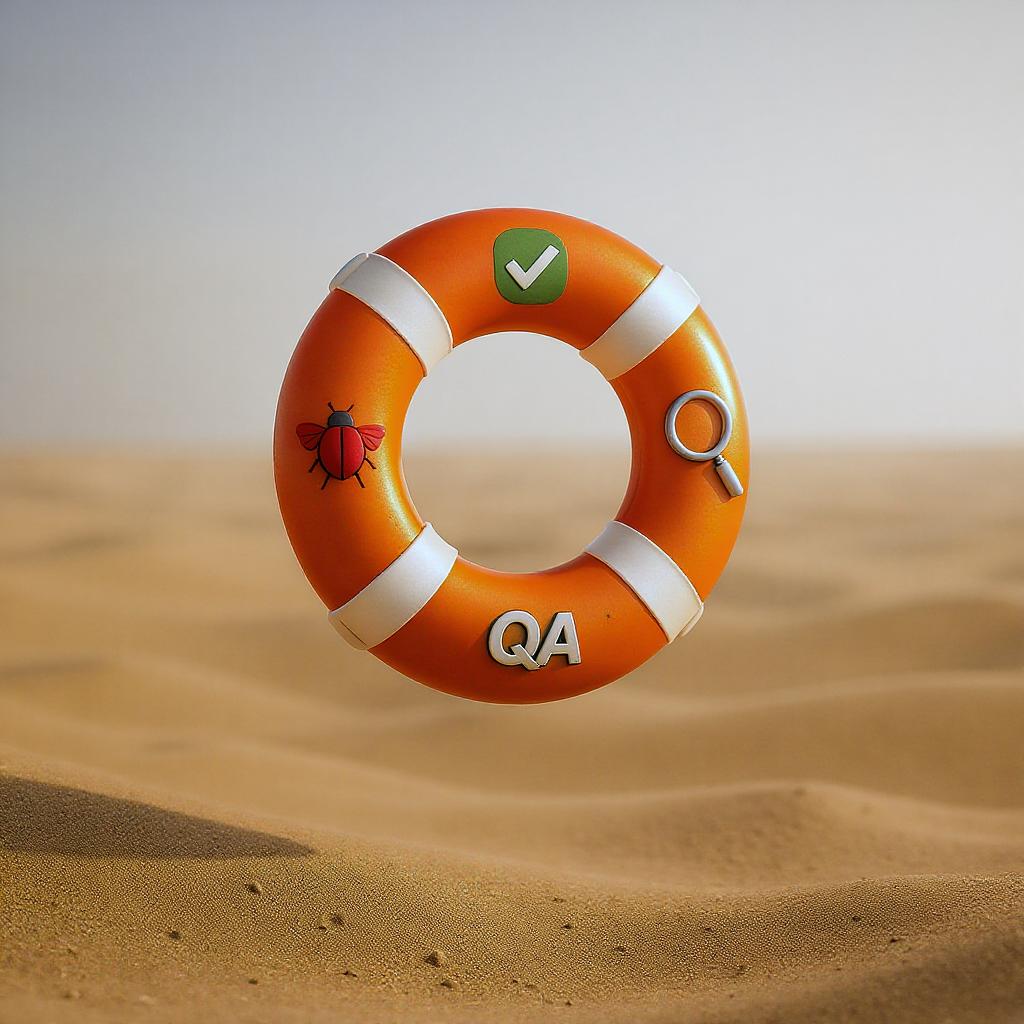
▶️ Introduction – Escaping the QA Quicksand
Most projects treat quality as a final checkpoint—a pit stop before go‑live. But like quicksand, minor defects swallowed early can trap you later, creating crises that are costly and demoralizing. This guide shows you how to throw a lifeline of quality throughout your delivery: small, frequent safeguards that catch issues and keep your team moving with confidence.
1️⃣ Recognizing the Quicksand: Signs Your QA Is Reactive
- Big‑Bang Testing: All QA squeezed at the end.
- Audit Paralysis: Long, rigid test cycles that block progress.
- Hidden Drifts: Defects surface only during UAT or production.
- Morale Sink: Teams fear the QA phase more than they value it.
2️⃣ Principle 1: Continuous Smoke Tests – The First Line of Defense
- What: Automate lightweight smoke checks on each build.
- Why: Immediate feedback on critical functionality prevents major sinks.
- How:
- Integrate a simple pass/fail suite in your CI pipeline.
- Publish a daily “Smoke Status” on your team board.
- Celebrate 100% passes—boosts confidence.
Case Vignette: A retail app team reduced weekend fire drills by 80% after adding a 5‑test smoke suite that ran on every commit.
3️⃣ Principle 2: Quality Stations in Stand‑Ups – Micro‑Audits on the Move
- What: A dedicated “quality minute” in daily stand‑ups.
- Why: Keeps QA top‑of‑mind and surfaces small issues before they grow.
- How:
- Each member shares one quality observation (bug found, test added).
- Flag any emerging patterns (“three UI misalignments this week”).
- Assign immediate owners for micro‑fixes.
4️⃣ Principle 3: Shared Quality Dashboard – Visibility as Lifeline
- What: A joint board showing test coverage, defect trends, and open risks.
- Why: Transparent metrics empower everyone to jump in, not just QA.
- How:
- Visualize key metrics: test pass rate, new vs. resolved defects, coverage gaps.
- Color‑code alerts: green = safe, yellow = caution, red = rescue needed.
- Link each alert to an owner and target resolution time.
Impact: Teams triaged and closed 60% of critical bugs same day when visibility improved.
5️⃣ Principle 4: Rescue Rituals – Scheduled Quality “Fire Drills”
- What: Short, focused sessions to simulate and resolve potential failure modes.
- Why: Trains the team to respond quickly and builds muscle memory.
- How:
- Identify one high‑risk feature.
- Convene a 30‑min drill: run test failures, practice rollback, fix on the fly.
- Document learnings in a “Rescue Log” for future reference.
6️⃣ Principle 5: Cross‑Functional QA Pairing – Knowledge Rescue
- What: Pair developers, QA, and ops for test design and execution.
- Why: Blends expertise and prevents siloed thinking.
- How:
- Rotate pairings each sprint.
- Use real‑time collaboration tools (screen‑share, mob‑testing).
- Share scripts and insights in a common repo.
Real Story: A CMS migration project prevented data loss by pairing a DBA with a QA engineer in every regression run.
7️⃣ Principle 6: Quality Guilds – Community Rescue Workshops
- What: Monthly gatherings of QA, dev, and product for knowledge‑sharing.
- Why: Builds a culture of collective responsibility and continuous improvement.
- How:
- 15‑min lightning talks: one person shares a tricky bug or new test tool.
- Group discussions on defect prevention strategies.
- Action items for next sprint’s lifeline improvements.
8️⃣ Principle 7: Predictive Alerts – Automated Lifeline Hooks
- What: AI or rule‑based alerts on anomaly detection (performance drops, error spikes).
- Why: Proactive rescue before human‑found defects.
- How:
- Integrate monitoring tools (New Relic, Sentry) with your communication channels.
- Set threshold triggers for immediate notifications.
- Assign “first responder” roles in rotations.
9️⃣ Principle 8: Continuous Retrospective – Refining Your Lifeline
- What: Include quality lifeline review in every sprint retrospective.
- Why: Ensures lifeline remains responsive to evolving risks.
- How:
- Ask: What lifeline practice prevented a sink this sprint?
- What gaps did we notice?
- Plan one improvement for next sprint.
🔚 Conclusion – A Project’s Lifeline Is Its Quality Culture
Quality isn’t a pit stop or an emergency lane. It’s the lifeline woven into every sprint, every stand‑up, every build. By embedding smoke tests, micro‑audits, visibility dashboards, rescue drills, cross‑functional pairings, guilds, predictive alerts, and continuous retrospectives, you transform QA from quicksand into a continuous rescue net.
➡️ Action: Choose one lifeline principle this week—implement a smoke suite or a quality station—and watch how small hooks prevent big sinks.
Leave a Reply
You must be logged in to post a comment.