
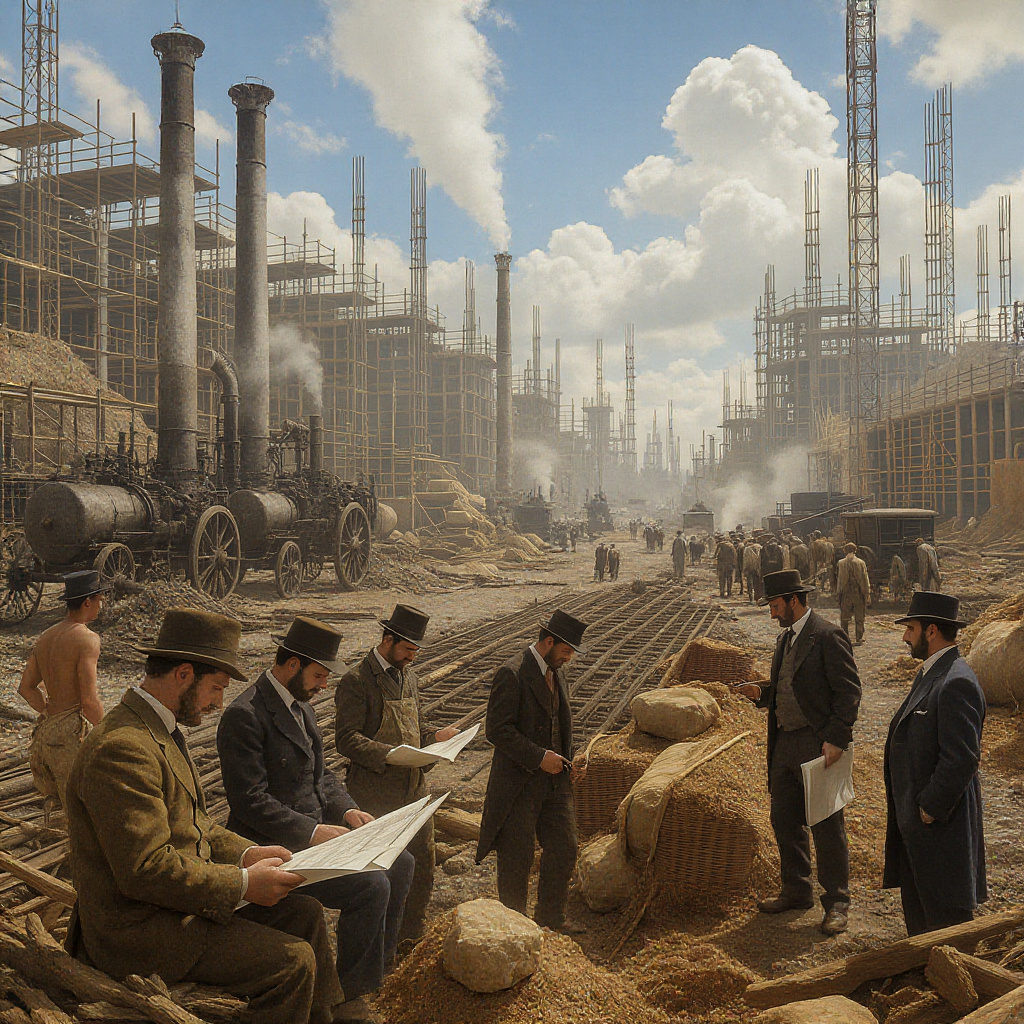
1. The Railway Era – A Perfect Case Study of Stakeholder Complexity
The 19th-century railway boom was more than an engineering revolution — it was a social and political battleground. Railways promised speed, connectivity, and economic growth, but they also disrupted land ownership, labor structures, and traditional commerce. This made them an ideal example of how diverse stakeholders collide.
- Investors: Wealthy industrialists funded railways expecting profits. They demanded speed, scale, and visible results, often pushing managers to cut corners.
- Governments: Politicians saw railways as tools of power. They intervened with laws, approvals, and taxes, balancing public good with private enterprise.
- Communities: Farmers, traders, and towns often resisted. Some feared loss of land or livelihoods, others worried about safety. Their resistance could halt progress entirely.
- Workers: Laborers faced backbreaking conditions. Without their trust and buy-in, strikes and walkouts became inevitable.
👉 The railway age mirrors today’s projects: diverse expectations, hidden power struggles, and the constant need for alignment.
2. When Stakeholders Were Ignored – Derailments in History
Many railway projects became cautionary tales because leaders underestimated stakeholders.
- Land Seizures and Protests: In parts of Britain and America, communities fought back against unfair land acquisitions. Entire projects stalled under legal battles. Lesson: Ignoring community voices may save time at first but creates massive costs later.
- Worker Strikes: Poor safety and long hours led to strikes that froze projects. This mirrors today’s “quiet quitting” or burnout — disengaged stakeholders don’t sabotage openly, but progress slows to a crawl.
- Public Backlash After Accidents: Trains that derailed due to rushed construction caused loss of life, shaking public confidence. A parallel today would be a data breach or product failure that damages trust irreparably.
👉 Stakeholders are not “risks to be managed” but forces that shape the outcome. Projects that viewed them as obstacles often collapsed.
3. How Stakeholder Alignment Built Lasting Railways
Not all projects failed. The ones that thrived had certain strategies that we still use today, though under modern names.
- Transparent Communication: Some companies held public meetings to explain routes, jobs, and benefits. This reduced resistance. Today, PMs use townhalls, newsletters, and dashboards for the same purpose.
- Shared Value Creation: Railways that prioritized local hiring and offered compensation for land gained allies instead of enemies. Modern equivalents include CSR programs and employee engagement initiatives.
- Flexibility in Planning: When protests erupted, successful managers negotiated alternative routes or phased plans instead of forcing through. In Agile terms, they pivoted instead of clinging to rigid roadmaps.
👉 These historical practices show that stakeholder engagement is less about theory and more about empathy and adaptation.
4. Modern Parallels – Today’s “Railways” in the Corporate World
Today’s mega-projects may not involve laying steel tracks, but the dynamics are uncannily similar.
- Digital Transformation: Sponsors demand speed, teams struggle with new tools, regulators enforce compliance, and employees resist change. Each one mirrors a 19th-century railway stakeholder.
- Infrastructure Projects: Public transport, airports, and smart cities still face the same mix of investors, governments, workers, and communities.
- Corporate Strategy Shifts: Even in smaller projects like product launches, the “railway lesson” applies — miss one stakeholder, and the entire rollout derails.
👉 The Industrial Age wasn’t just about trains; it was a rehearsal for modern project leadership.
5. Practical Lessons for Today’s PMs
Here are actionable insights directly drawn from history, rephrased for modern use:
- Listen Early, Save Time Later: Engaging communities before laying tracks avoided conflicts. For PMs, stakeholder mapping at project start prevents mid-project surprises.
- Respect Invisible Power: Farmers with no political standing stopped railroads through collective action. Today, even a junior team member or a small group of end-users can block adoption.
- Don’t Sacrifice Trust for Speed: Rail companies that rushed often suffered disasters. Similarly, rushing without alignment leads to reputational damage.
- Make Stakeholders Allies, Not Enemies: Companies that turned resistance into collaboration survived. PMs who convert critics into contributors unlock hidden support.
👉 These lessons are not academic; they’re survival strategies.
6. Conclusion – Stakeholders as the Real Engine
The history of railways proves that steel and steam were not the true engines of progress — people were. Every project manager, whether in 1850 or 2025, is not just building deliverables but building consensus. Stakeholders are not the barriers on the track; they are the track itself. Without them, the train goes nowhere.
The next time you’re mapping stakeholders, think of those rail builders. You’re not managing “resources.” You’re aligning forces of history.
Leave a Reply
You must be logged in to post a comment.