
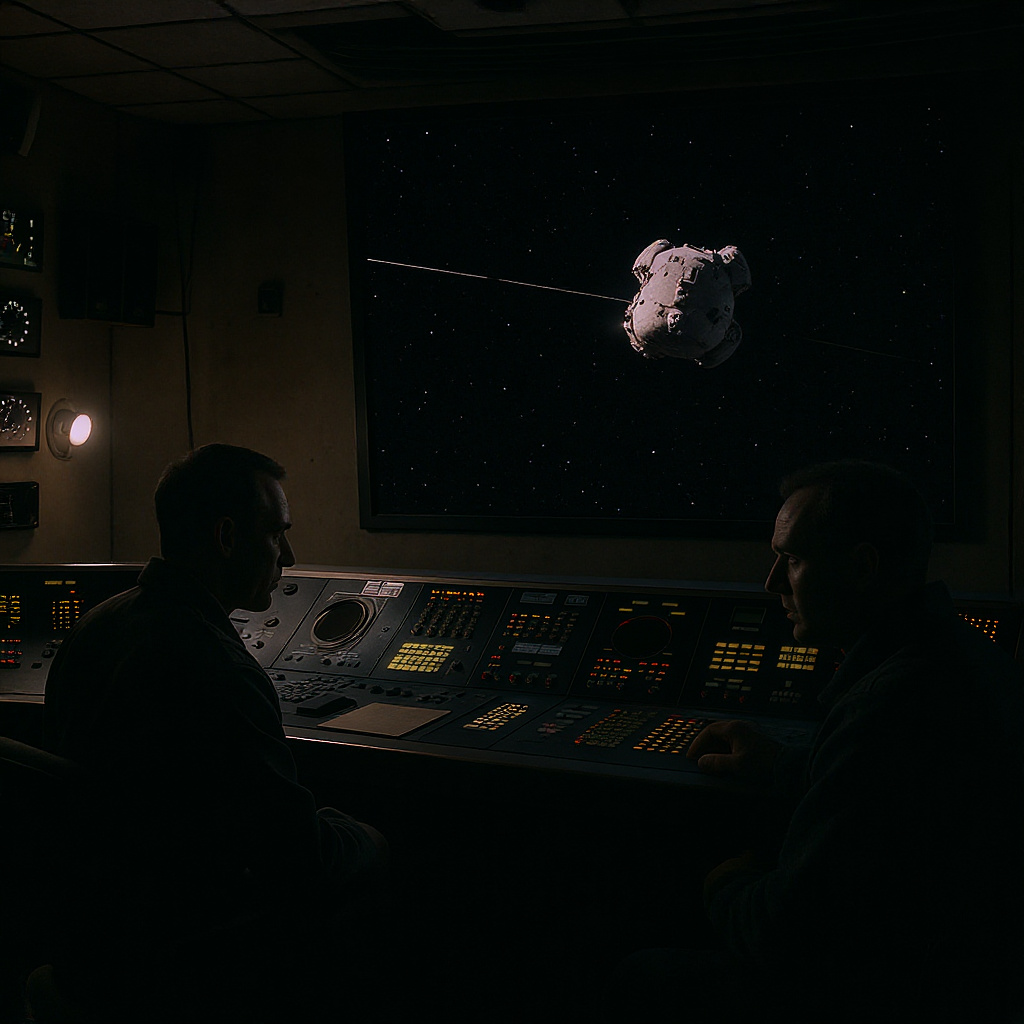
1. The Mission That Didn’t Go as Planned
By April 1970, NASA had already achieved the impossible — humans had walked on the Moon. Apollo 13 was meant to be just another chapter in a now-routine story of success. But as any project manager knows, complacency is the quietest risk of all.
Just two days into the mission, an oxygen tank in the Service Module exploded. Systems failed one after another. Power dropped. CO₂ levels rose. And the spacecraft began drifting off course.
In that moment, the mission objective shifted from “landing on the Moon” to “bringing the crew home alive.”
This pivot — fast, focused, and emotionally grounded — was one of the most profound examples of adaptive project management in history.
2. Risk Becomes Real – When Theory Meets Chaos
NASA had thousands of documented risks, simulations, and contingency plans. But this particular failure mode wasn’t in the manuals.
When the tank exploded, engineers on the ground didn’t panic — they transformed the unknown into action.
Let’s break down the anatomy of their response.
a) Rapid Reprioritization
- Within minutes, NASA leadership scrapped the moon landing goal. The new single objective: Survival.
- Every system, every task, every communication was aligned to that new north star.
Lesson: When risk materializes, you don’t manage it — you redefine success.
b) Real-Time Problem Solving
- With limited power and oxygen, the Command Module had to be shut down. The crew moved into the Lunar Module — designed for only two people for two days, not three for four.
- Ground engineers developed a method to remove carbon dioxide using makeshift filters built from spare materials onboard.
Lesson: Innovation in crisis isn’t creativity — it’s constraint under purpose.
c) Communication as a Risk Control Tool
- NASA’s success hinged on flawless communication between mission control and the crew.
- Every instruction had to be clear, verified, and repeatable. Miscommunication was a risk more dangerous than any malfunction.
Lesson: In crisis, clarity saves lives. Communication is not soft skill — it’s survival skill.
d) Parallel Workstreams
- NASA engineers worked in “tiger teams” — groups tackling different problems simultaneously (power, navigation, life support, trajectory).
- This decentralized yet coordinated effort allowed solutions to emerge in parallel instead of sequence.
Lesson: During uncertainty, the best risk strategy is distributed intelligence, not centralized control.
3. Leadership in the Pressure Cooker
The human side of Apollo 13 is what elevates it from technical recovery to a leadership case study.
a) Calm Over Control
Flight Director Gene Kranz became a symbol of composed authority. His famous statement — “Failure is not an option” — wasn’t a slogan; it was a mindset.
He demanded discipline, but never panic. Every team knew their scope, their priority, and their timeline.
Lesson: In crisis leadership, tone determines trajectory.
b) Empowerment Through Trust
Kranz didn’t micromanage. He empowered young engineers to suggest, test, and lead fixes.
The team’s confidence came not from certainty, but from trust — the belief that no idea was too small to save a life.
Lesson: In risk management, empowerment is a mitigation strategy.
c) Emotional Containment
In an era before psychological safety was even a term, NASA demonstrated it instinctively. Engineers could admit “I don’t know” without fear. That vulnerability was their superpower.
Lesson: Risk thrives on silence; safety grows from honesty.
4. Frameworks from the Future – Risk Lessons for Modern Projects
The Apollo 13 story continues to shape project management methodologies even today. Let’s decode the lasting principles.
a) Dynamic Risk Registers
- Risks evolve with context. The moment a new threat emerges, your plan must adapt — not once a month, but instantly.
- Modern PMOs can emulate this through real-time dashboards that dynamically recalculate impact and probability.
b) Simulation Culture
- NASA trained obsessively for failure scenarios.
- In today’s corporate world, crisis simulation exercises should be routine — not reactionary. They build reflex, not just readiness.
c) Cross-Functional Thinking
- Every Apollo 13 team member understood systems outside their own domain.
- Encourage T-shaped professionals — deep in one skill, broad in understanding — so your team can pivot during crises.
d) Psychological Safety in Projects
- No one at NASA was punished for mistakes during the crisis. That’s why creativity flowed.
- Project leaders must design cultures where escalation is not a threat, but a contribution.
e) The Risk-Reward Mindset
- Apollo 13 showed that risk is not the enemy of success — it’s its twin.
- Every ambitious goal carries inherent danger. The key is not avoiding risk, but managing it with humility and curiosity.
5. The Return – Success Redefined
After four tense days, Apollo 13 re-entered Earth’s atmosphere. The world watched as the capsule splashed safely into the Pacific Ocean.
There was no celebration — just relief, exhaustion, and quiet pride.
NASA called it a “successful failure.” The mission never reached the Moon, but it reached the limit of human resilience and ingenuity.
For project managers, Apollo 13 is a timeless reminder:
- Risks are not meant to be eliminated — they’re meant to be anticipated, understood, and respected.
- The best teams prepare for the unthinkable — and when it arrives, they execute with grace.
6. Final Reflection – When Failure Becomes a Mirror
Every project faces its “oxygen tank explosion” moment — when plans collapse, and reality rewrites your strategy.
In those moments, risk management becomes less about process, and more about presence.
- Can your team stay calm under pressure?
- Can your leaders trust their people to act?
- Can your organization learn without blame?
That’s where greatness is born.
Apollo 13 didn’t just bring astronauts home. It brought the world a message that echoes through every project, every crisis, every boardroom:
Failure will always find you. But so will courage, if you’ve built it into your team.
Leave a Reply
You must be logged in to post a comment.