
1. The Thirteen Days That Defined Communication
In October 1962, intelligence analysts discovered Soviet nuclear missiles being secretly installed in Cuba. The U.S. faced an existential threat.
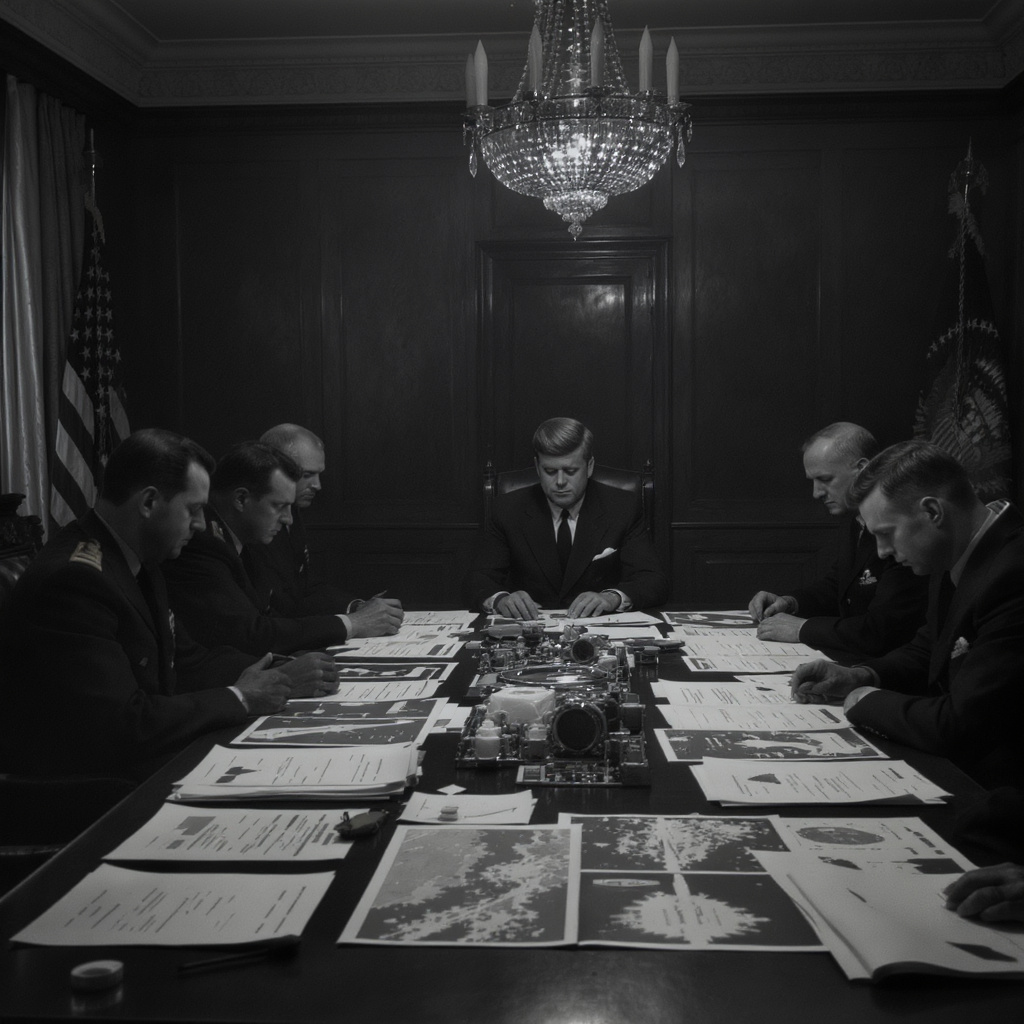
Within hours, the White House formed the Executive Committee of the National Security Council (ExComm) — a group of senior advisors, generals, diplomats, and intelligence officers tasked with one objective: prevent nuclear war.
The situation was a project unlike any other — high risk, zero tolerance for failure, and no precedent to follow.
The only variable within control? Communication.
For the next 13 days, decisions were not just made — they were crafted through conversation. Every word chosen by Kennedy, Khrushchev, or their intermediaries could trigger or prevent catastrophe.
2. The Communication Web – How Messages Were Managed
What made this event extraordinary wasn’t the intelligence gathering or the military strategy — it was how communication was used as a structured project process.
Let’s break down the communication dynamics that defined those tense days:
a) Internal Communication – The War Room Approach
The White House ExComm meetings were recorded (unbeknownst to most participants). These recordings later revealed an incredible communication discipline:
- Kennedy encouraged open debate but enforced respect for sequence — only one person spoke at a time.
- Notes were meticulously documented, ensuring no misinterpretation of intent.
- Opposing opinions were encouraged — to test assumptions, not to divide teams.
Lesson: In high-pressure projects, internal communication must allow for chaos in ideas, but order in dialogue.
b) External Communication – The Dance with the Kremlin
Every message to Moscow was reviewed by multiple advisors for wording, tone, and cultural nuance.
The U.S. knew that a single phrase could be read as either aggression or conciliation.
When two contradictory messages from Khrushchev arrived, Kennedy’s team made a deliberate choice: to respond only to the peaceful one, essentially selecting the narrative they wanted to continue.
Lesson: Communication is not just transmission — it’s interpretation. The message you choose to answer defines the story you write.
c) Media Communication – Managing the Narrative
The Kennedy administration managed the press like a project stakeholder.
- They withheld classified details until strategy alignment was achieved.
- They timed announcements to influence both domestic opinion and international perception.
- They balanced transparency with security — sharing enough to gain trust, but not enough to lose control.
Lesson: Communication in crisis requires careful calibration between truth and timing.
3. The Psychological Layer of Communication
Beyond words, the Cuban Missile Crisis was about emotional management.
Kennedy understood that panic — both inside his team and across the public — was the real enemy.
a) Controlled Tone and Body Language
Kennedy’s televised address on October 22 was calm, measured, and precise. No anger, no theatrics — just resolve.
That tone projected confidence without provocation, giving citizens reassurance and signaling the Soviets that diplomacy was still viable.
Lesson: Your tone often communicates what your words cannot. In leadership, calm is contagious.
b) Empathy as a Strategy
Privately, Kennedy and Khrushchev shared a mutual understanding — both wanted to avoid war. This empathy became the unspoken bridge that made negotiations possible.
Lesson: Empathy transforms communication from transaction to connection. It’s a leadership superpower in any crisis.
4. Communication Frameworks Born from Crisis
Out of this event came one of the most influential communication practices in history — the “Hotline Agreement” (1963), establishing a direct communication link between Washington and Moscow to avoid delays in future crises.
Let’s distill the lasting frameworks for modern project managers:
a) Establish Communication Channels Before Crisis Hits
The lack of a direct channel during the crisis almost caused disaster.
In modern projects, don’t wait for escalation — set up transparent, tiered communication pathways from Day 1.
b) Role-Based Communication Protocols
In ExComm, every member had a defined speaking role. This reduced noise and improved accountability.
Similarly, project teams should use RACI matrices for communication — defining who reports, approves, consults, and informs.
c) Redundancy and Clarity
Each critical message was verified via multiple sources before action.
Today, this translates to using consistent documentation and cross-checks — so assumptions don’t slip into decisions.
d) Crisis Messaging Templates
The U.S. drafted multiple speech versions for Kennedy, anticipating different outcomes.
Every project should have pre-approved communication templates for delays, escalations, or risk disclosures.
5. The Unsung Project Managers – Behind the Curtain
People like McGeorge Bundy, Robert Kennedy, and Dean Rusk played crucial roles as communication intermediaries — translating ideas into language that carried diplomacy instead of hostility.
These were the “project communication officers” before the title existed.
Their mastery was in converting emotion into structure.
Their success lay in precision — every memo, every phrase was deliberate.
Lesson: The best communicators are translators of intent, not just conveyors of information.
6. Communication as an Ethical Compass
What separates great communicators from manipulative ones is intent.
Kennedy’s approach wasn’t just tactical — it was ethical. His words aimed to protect life, not preserve pride.
In project management, ethical communication builds long-term credibility.
Shortcuts, silence, or distortion may win a day — but they lose the trust that sustains a decade.
7. Takeaways for Modern Project Managers
If the Cuban Missile Crisis were a corporate project, here’s what we’d learn:
✅ Structured Communication Saves Projects: Define who speaks to whom, how often, and why.
✅ Transparency is Risk Mitigation: The more you hide, the more you gamble with alignment.
✅ Empathy Prevents Escalation: Understand your stakeholder’s fears before responding to their demands.
✅ Timing is Everything: The right message at the wrong time is still the wrong message.
✅ Documentation is Memory: Verbal commitments fade; written clarity endures.
8. Final Reflection – The Power of the Pause
The world survived those 13 days not because people spoke fast, but because they paused before they spoke.
In the silence between decisions, Kennedy and his team found the wisdom to act with restraint.
That’s what communication mastery really is — not speaking more, but speaking right.
When your next project feels like it’s on the brink of collapse, remember:
You don’t always need the loudest voice in the room — just the clearest one.
Leave a Reply
You must be logged in to post a comment.