
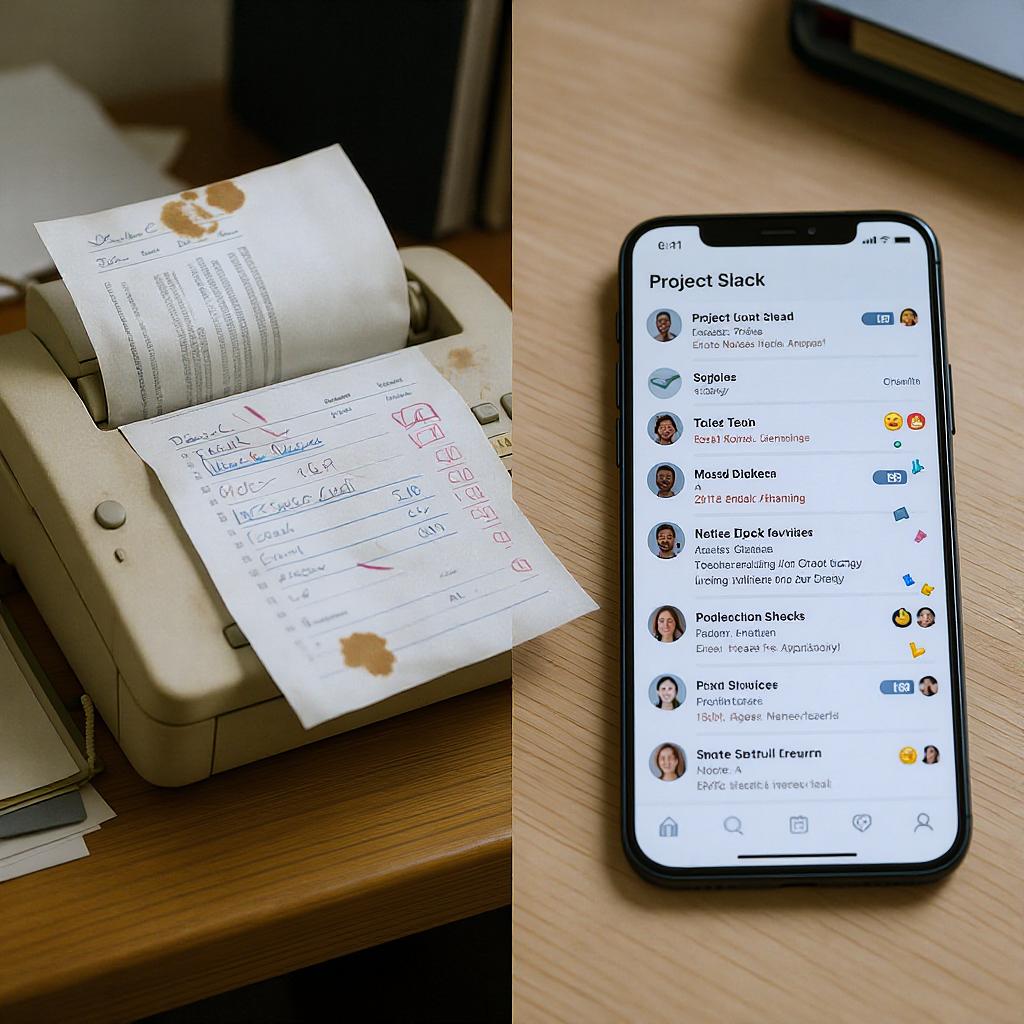
▶️ Introduction – Communication: The Lifeblood of Projects
No matter how robust your plan is, if communication falters, the project suffers.
Deadlines slip. Risks explode. Stakeholders disengage.
But communication isn’t just about information—it’s about influence, inspiration, and alignment.
It’s not a side-task; it’s a core strategy.
1️⃣ Traditional Communication: Structured, Safe… and Often Stale
- The Weekly Report Model
- Status updates sent every Friday, loaded with numbers and milestones.
- Few read them; fewer understood the implications.
- Command-and-Deliver Channels
- Messages flowed downward: PM to team, sponsor to PM.
- Feedback cycles were slow, filtered, and often lost in translation.
- Email-Only Culture
- Every conversation archived. Every update CCed to 12 people.
- Response rates dropped as inbox fatigue rose.
- One-Person Show
- PMs were sole communicators. Teams remained invisible to stakeholders.
- No shared voice, no community storytelling.
What This Created
- Delayed reactions to red flags
- Misalignment on priorities
- Passive stakeholders
- Overworked PMs acting as bottlenecks
2️⃣ Modern Project Communication: Conversational, Transparent, Inclusive
- Multichannel Messaging
- Slack, MS Teams, WhatsApp groups—each chosen by purpose and urgency.
- Channels segmented by topics, roles, and urgency levels.
- Visual Dashboards & Nudges
- Tools like ClickUp, Monday, or PowerBI share real-time progress visually.
- Metrics are color-coded, interactive, and self-serve.
- Asynchronous Standups
- Teams share updates via Loom videos, voice notes, or morning check-ins.
- Keeps global teams in sync without killing time zones.
- Storytelling in Updates
- Updates don’t just say what happened—they explain why it matters.
- Injects emotion, relevance, and user-centric framing.
- Feedback Loops & Pulse Checks
- Quick polls, emoji reactions, open-ended prompts—keep teams heard and engaged.
- Communication is no longer a broadcast; it’s a dialogue.
3️⃣ Timeless Rules for Impactful Communication
- Be Human First
- Avoid jargon. Write the way you speak. Use analogies when possible.
- Make It Actionable
- What do you want the reader/listener to do next? Be clear and specific.
- Be Consistent but Not Repetitive
- Establish rhythm (daily standups, weekly summaries) but tailor each message.
- Customize by Audience
- Your dev team doesn’t need the same update as your CFO. Adjust tone, format, and depth.
- Create Pull, Not Push
- Build dashboards and spaces stakeholders want to visit. Keep it live, clean, and relevant.
4️⃣ Case Studies: When Communication Made or Broke the Project
⚠️ Project Monologue (2014 – ERP Rollout)
- Weekly reports emailed to 40 people. No responses.
- One misread milestone delayed vendor onboarding by 3 weeks.
- Final result: $350k budget overrun and strained vendor relationships.
✅ Project MicDrop (2023 – Mobile App Launch)
- Project had a shared Miro board + dedicated Slack channel with daily GIF-based updates.
- Used polls to prioritize backlog items and video recaps for sprint reviews.
- Stakeholder NPS: 9.2. Delivery ahead of schedule.
🧠 Insight: Communication isn’t a risk—it’s a performance enhancer.
5️⃣ Self-Check: How Communicative Is Your Communication?
| Statement | Yes | No |
|---|---|---|
| Stakeholders know where to find live project updates | ☐ | ☐ |
| We use visuals (dashboards, charts, maps) instead of plain text | ☐ | ☐ |
| The team contributes to communication—not just the PM | ☐ | ☐ |
| Communication channels are tailored to urgency and audience | ☐ | ☐ |
| We collect and act on communication feedback regularly | ☐ | ☐ |
👉 3+ “No” responses? Your communication plan may be outdated.
6️⃣ Ready-to-Use Tools & Templates
- Audience Mapping Matrix
- Tailors what message goes to whom, how, and how often
- Project Update Canvas
- Turns dry data into engaging storytelling (who/what/why/next)
- Slack Update Formatter
- A reusable template for writing effective async standups
- Communication Cadence Planner
- Aligns messages with project phases and stakeholder needs
➡️ Practical Steps to Modernize Communication
- Start a Weekly Video Recap
- Use Loom or Zoom to summarize progress in 3 minutes. Human > PDF.
- Build a Living Dashboard
- Keep it real-time, clean, and visually intuitive.
- Train the Team to Tell Stories
- Rotate weekly updates. Let others present wins and blockers.
- Run Monthly Communication Audits
- Ask: Is it landing? Or just being sent?
- Celebrate Communication Heroes
- Reward clarity, empathy, and consistency—not just frequency.
🔚 Conclusion: Communication Isn’t a Task. It’s a Culture.
Project communication doesn’t belong at the end of your to-do list.
It is the project.
If your stakeholders are in the dark, your deliverables don’t matter.
If your team isn’t aligned, your plan won’t hold.
So speak simply. Listen deeply. Share frequently.
📢 Because in a noisy world, clarity is your superpower.
Leave a Reply
You must be logged in to post a comment.