
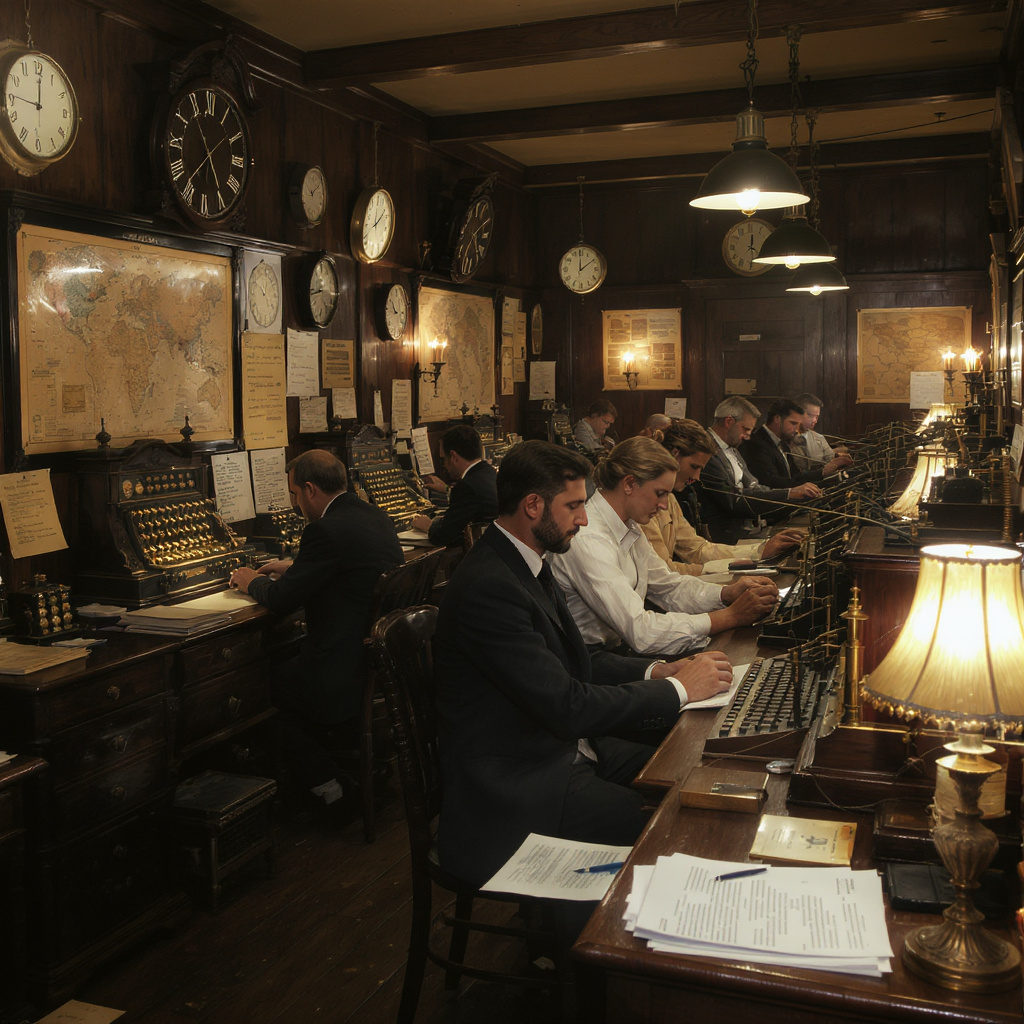
1. Setting the Scene
It’s late evening in a quiet study. A 19th-century railway baron, still in his waistcoat, pores over a telegraph message. Suddenly, across the room, a modern project manager appears — laptop in hand, phone buzzing. The two lock eyes.
“Who are you?” asks the baron.
“Just another project manager,” replies the PM.
And so begins a conversation that bridges centuries.
2. The Dialogue
Railway Baron (RB): “Do you know how long I waited for this telegraph? Three weeks. A supplier in Birmingham sent me updates about steel shipments. By the time it arrived, the delay had already cost me a month.”
Modern Project Manager (PM): “Three weeks? I’d lose my mind. My team gets anxious if I don’t reply to their Slack messages within 30 minutes.”
RB: “Slack? What is that?”
PM: “A tool that makes sure I’m constantly distracted.”
RB (laughs): “So, different era, same chaos.”
RB: “Our biggest challenge was silence. When communication didn’t arrive, we had no way of knowing whether it was lost, delayed, or ignored. That uncertainty stalled progress.”
PM: “Funny. My biggest challenge is noise. Too many channels, too many messages. The right information gets buried in the chatter.”
RB: “So you drown in excess, while I suffocated in scarcity. But both end in confusion.”
PM: “We use dashboards, emails, reports, status updates. Yet, stakeholders still complain they don’t know what’s happening.”
RB: “We had board meetings. Investors demanded updates in person. Workers relied on foremen to pass the word. Miscommunication was inevitable.”
PM: “Sounds like my stakeholders — except now they want real-time updates on their phones.”
3. Lessons Hidden in the Dialogue
From their conversation, a few timeless truths emerge:
- Communication is not about volume but clarity.
- The baron’s problem was missing information. The PM’s problem is too much. The common solution? Messages that are short, targeted, and relevant.
- Whether it’s a telegraph or an email, what matters is if the recipient knows exactly what action to take.
- Delay creates mistrust.
- In the 1800s, weeks of waiting created speculation and rumor. In 2025, a stakeholder left waiting for an update assumes incompetence.
- Both eras show that timely communication is not just about progress — it’s about trust.
- Stakeholders interpret silence their own way.
- A missing telegraph could mean sabotage, loss, or neglect.
- A missing project report today might suggest disinterest or incompetence.
- Communication isn’t just about sending; it’s about reducing ambiguity.
- Tools change, principles don’t.
- From handwritten letters to Slack threads, the essence is the same: align people, clarify actions, reduce confusion.
- The baron and the PM, despite centuries apart, deal with the same core struggle: how to make sure people know what to do, when to do it, and why it matters.
4. The Bigger Picture – What We Can Carry Forward
The fictional dialogue reminds us that project communication has always been the real battlefield. The technology only changes the form, not the essence.
- Today’s PMs mistake “more communication” for “better communication.” But just like the railway baron, what people really want is reliable, clear, and timely information.
- Every tool is just a channel. The real currency is trust and clarity. If you don’t have that, no dashboard, no app, no AI bot can save your project.
5. Conclusion – Across Time, the Struggle Remains
The railway baron leans back in his chair. “So, after 200 years, you still struggle with communication?”
The modern PM sighs. “Yes. But at least now we can fail faster.”
They laugh, both realizing the truth: projects don’t fail because of poor technology, they fail because of poor conversations.
As the baron folds his telegraph and the PM closes their laptop, one message echoes across time: Tools come and go, but the need for clarity, timeliness, and empathy in communication is eternal.
Leave a Reply
You must be logged in to post a comment.