
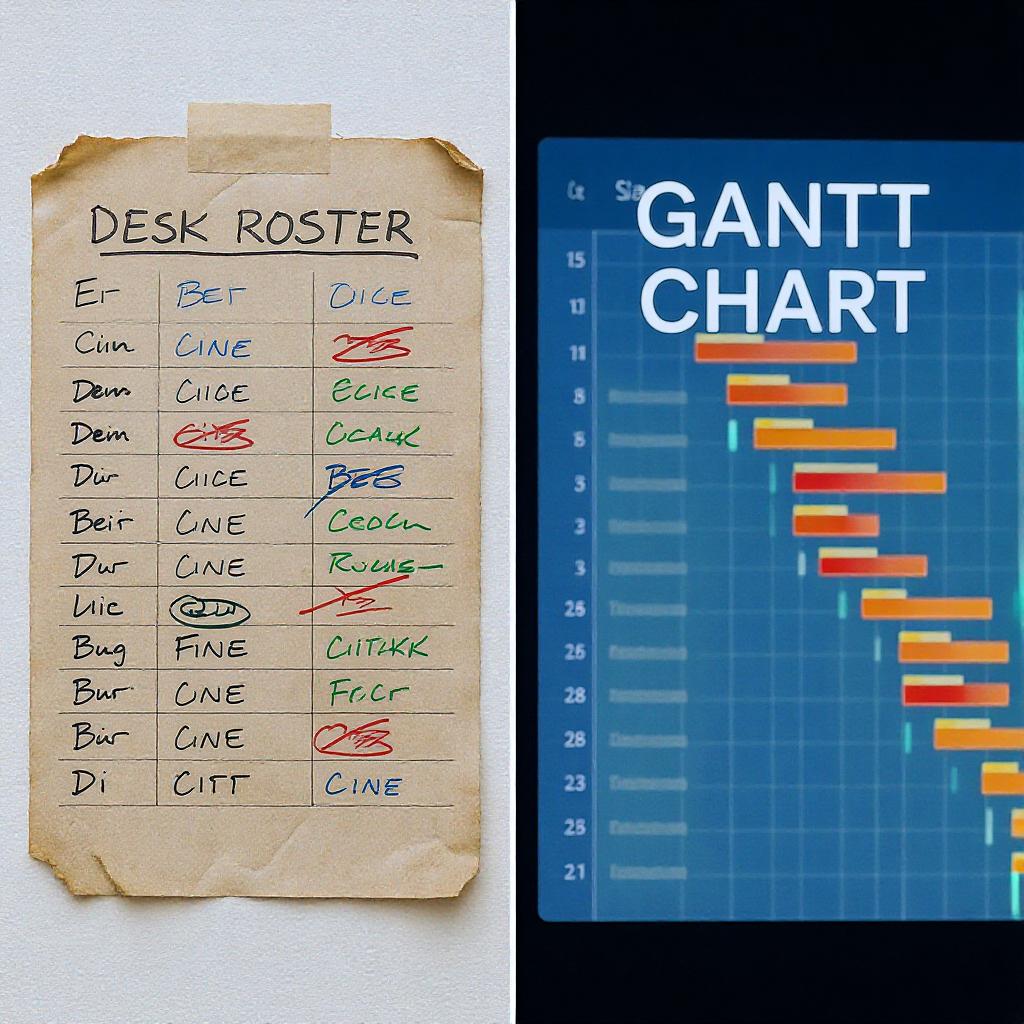
▶️ Introduction – Why Resource Management Matters
Effective resource management is the linchpin of on‑time, on‑budget delivery.
It ensures teams are neither idle nor overwhelmed, balancing individual capacity with project demands.
While our tools have transformed, the core challenge remains: align talent with tasks in a way that maximizes performance and satisfaction.
1️⃣ The Early Days: Manual Roster Juggling
- Static Spreadsheets
- A single master file held everyone’s assignments.
- Color coding and filters added complexity—and confusion.
- Ad‑hoc Availability Checks
- PMs emailed or walked over to desks asking, “Are you free next week?”
- No centralized calendar meant frequent double‑bookings.
- Informal Skill Ratings
- “John’s good at testing”—but no documented proof.
- Training needs often discovered at crunch time.
- Reactive Rebalancing
- Projects stalled until someone found a replacement.
- Last‑minute reassignments hurt morale.
- Minimal Strategic Alignment
- Resource planning was tactical, not tied to long‑term talent development.
Lessons from Back Then:
- Personal relationships filled data gaps—but didn’t scale.
- Lack of transparency created frustration and burnout.
- Manual processes ate into valuable project time.
2️⃣ Today’s Practices: Intelligent, Collaborative, Proactive
- Live Utilization Dashboards
- Real‑time charts show who’s at 80% capacity vs. 120%.
- Heat‑maps highlight over‑ and under‑utilization.
- Skills and Competency Libraries
- Profiles list certifications, proficiencies, interests.
- Learning pathways integrated for up‑skilling.
- Predictive Capacity Forecasting
- AI suggests staffing changes based on upcoming milestones.
- Early warning if a team is likely to hit 110% load.
- Self‑Service Scheduling
- Team members submit availability, vacations, and focus days.
- PMs approve or suggest swaps with one click.
- Strategic Workforce Linkage
- Projects feed into longer‑term talent pipelines.
- Skill gaps identified and training scheduled in advance.
Why It Works:
- Transparency fosters trust and ownership.
- Data‑driven insights replace guesswork.
- Proactivity prevents burnout and delays.
- Alignment with HR ensures career growth and retention.
3️⃣ Core Principles That Endure
Despite the leap in tools, these truths still apply:
- People First
- Respect individual capacity and career aspirations.
- Clarity & Transparency
- Everyone should see who’s working on what—and why.
- Balance & Flexibility
- Plan for buffers; allow dynamic reassignments.
- Skill‑Based Alignment
- Fit tasks to strengths, not convenience.
- Continuous Improvement
- Review after each project: what worked, what didn’t?
4️⃣ Real‑Life Contrast: Two Resource Scenarios
📌 Scenario A (2012)
- Industry: Marketing Agency
- Planning: Monthly spreadsheets emailed to 50 staff
- Pain Points: Frequent overbooking, late nights, missed deadlines
- Outcome: High turnover in junior roles
📌 Scenario B (2025)
- Industry: Software Development
- Planning: Integrated resource module in Azure DevOps
- Strengths: Automated alerts for overload, skills‑based assignment, developer self‑service
- Outcome: 25% increase in on‑time delivery, 15% reduction in overtime
Insight: The difference wasn’t just technology—it was building a culture where resource planning is a shared responsibility.
5️⃣ Self‑Assessment: How Mature Is Your Resource Management?
| Statement | Yes | No |
|---|---|---|
| Our team’s availability is updated in real time | ☐ | ☐ |
| We use skill profiles to assign tasks | ☐ | ☐ |
| Predictive tools warn us about upcoming capacity issues | ☐ | ☐ |
| Team members can adjust their own calendars with manager oversight | ☐ | ☐ |
| We align project plans to long‑term talent development roadmaps | ☐ | ☐ |
If you marked “No” on 2 or more, it’s time to modernize your approach.
6️⃣ Templates & Tools You Can Adopt
- Resource Heat‑Map Template
- An easy Excel/Google Sheet that color‑codes utilization at a glance.
- Skills Inventory Tracker
- A simple database to log certifications, years of experience, and interest levels.
- Capacity Forecast Blueprint
- A flowchart showing how upcoming tasks map to resource supply over 3–6 months.
- Self‑Service Request Form
- A quick form for team members to submit leave requests or focus‑time windows.
➡️ Next Steps: Building a Collaborative Resource Culture
- Kickoff Survey: Ask your team about current pain points.
- Tool Audit: Identify gaps in your current PM or ERP system.
- Pilot Program: Roll out one template or dashboard with a small team.
- Feedback Loop: Collect feedback and iterate monthly.
- Scale & Integrate: Embed best practices into your wider PMO or CoE.
🔚 Conclusion – The Human Edge in Resource Management
While software and AI can light the path, people walk it.
Successful resource management blends tech and trust, data and dialogue, planning and people care.
By honoring both, you’ll unlock true capacity, deliver more predictably, and cultivate a happier, more engaged team.
Leave a Reply
You must be logged in to post a comment.