
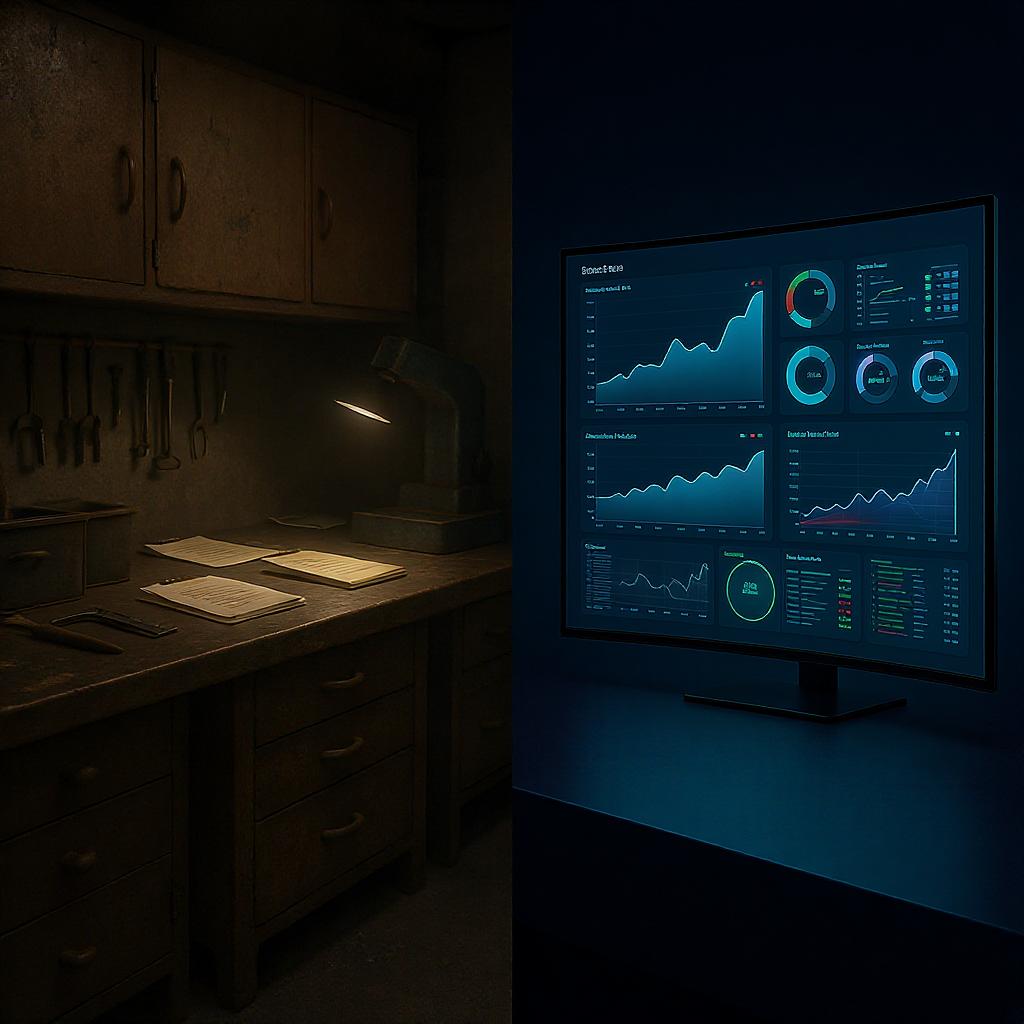
➤ Introduction – Why Quality Is More Than a Checklist
Quality management is the heartbeat of any project’s success. It ensures deliverables meet stakeholder needs and builds lasting trust. Although our tools and tactics have shifted dramatically, the core goal remains: deliver with excellence.
1. Quality in the Early Era: Inspection-Centric Approach
- End-of-Phase Audits
- Teams conducted inspections only after deliverables were complete.
- Defects discovered late required costly rework.
- Approval gates often caused bottlenecks.
- Manual Checklists & Reports
- Quality managers carried binders of checklists to inspect work.
- Data entry was paper-based, prone to human error.
- Historical lessons lived in filing cabinets.
- Separate QA Teams
- QA was a downstream function, called in after development.
- Collaboration between builders and testers was minimal.
- Hand-offs lacked context, leading to misunderstandings.
- Reactive Issue Resolution
- Teams responded to defects after they appeared.
- Root causes often remained hidden.
- Lesson Learned Sessions
- Held at project close—too late to benefit the current delivery.
2. Modern Quality: Proactive, Integrated, Automated
- Quality by Design
- Embedding quality requirements into the project charter.
- Defining clear acceptance criteria during planning.
- Automated Testing & Monitoring
- CI/CD pipelines run unit, integration, and regression tests on each build.
- Dashboards visualize defect trends, coverage metrics, and performance baselines.
- Cross-Functional Quality Circles
- Teams of developers, testers, and business users collaborate continuously.
- Daily stand-ups include a dedicated quality checkpoint.
- Continuous Feedback Loops
- Sprint retrospectives focus on process and product quality.
- Living wikis capture best practices—and are updated in real time.
- Predictive Analytics for Risk
- AI models forecast defect hotspots based on historical data.
- Early-warning alerts trigger targeted code reviews and audits.
3. Core Principles That Endure
Despite technological leaps, five quality principles stand firm:
- Customer Focus
- Understand and validate customer requirements continuously.
- Use prototypes and demos to align expectations.
- Process Discipline
- Standardize workflows, but allow flexibility where it counts.
- Maintain clear documentation and version control.
- Fact-Based Decisions
- Rely on metrics (defect density, escape rate, MTTR) to guide actions.
- Avoid gut-only judgments.
- Empowerment & Ownership
- Equip every team member to identify and fix quality issues.
- Celebrate quality champions publicly.
- Continuous Improvement
- Use retrospectives, root‐cause analyses, and Kaizen events.
- Iterate on processes and adapt quickly.
4. Real-World Vignettes
4.1 Manufacturing Upgrade
- Then: Quality audit at final assembly; reject rate soared.
- Now: In-line sensors and IoT detect deviations on the line.
- Impact: Defect rate cut by 60% and scrap costs halved.
4.2 Software Deployment
- Then: Bug bash week after a release; hotfixes on weekends.
- Now: Automated smoke tests in Docker containers—fail fast, fix faster.
- Impact: Production incidents down 70%; team morale up.
5. Self-Assessment: Your Quality Maturity
| Statement | Yes | No |
|---|---|---|
| Quality criteria are defined at project kickoff and revisited regularly | ☐ | ☐ |
| Automated tests run on every code change or deliverable update | ☐ | ☐ |
| Non-functional requirements (performance, security) are tested early and often | ☐ | ☐ |
| The team holds formal retrospectives and implements at least one improvement per sprint | ☐ | ☐ |
| Quality metrics are published and discussed in every stakeholder meeting | ☐ | ☐ |
If you answered “No” to 2 or more, prioritize embedding quality practices earlier.
6. Ready‑To‑Use Templates & Practices
- Quality Checklist Template
- Customizable for deliverable types: code, hardware, documentation.
- Automated Testing Blueprint
- Sample Jenkins/GitLab CI pipeline for multi‑stage testing.
- Root‑Cause Analysis Guide
- 5‑Why worksheet and fishbone diagram template.
- Continuous Improvement Kanban
- A board for tracking quality improvement ideas and their status.
7. Bringing It All Together
Quality management has journeyed from late-stage inspections to everyday excellence.
By marrying proven principles with modern practices—automation, analytics, and cross‑team collaboration—you ensure projects not only meet specs but delight stakeholders.
Quality isn’t a checkbox. It’s a culture.
Invest early. Automate wisely. Improve constantly.
Leave a Reply
You must be logged in to post a comment.